

Wacky Why's
Wacky Why #2
February 16, 2026
Why do immersive themes change the experience?
Let’s start with a simple question.
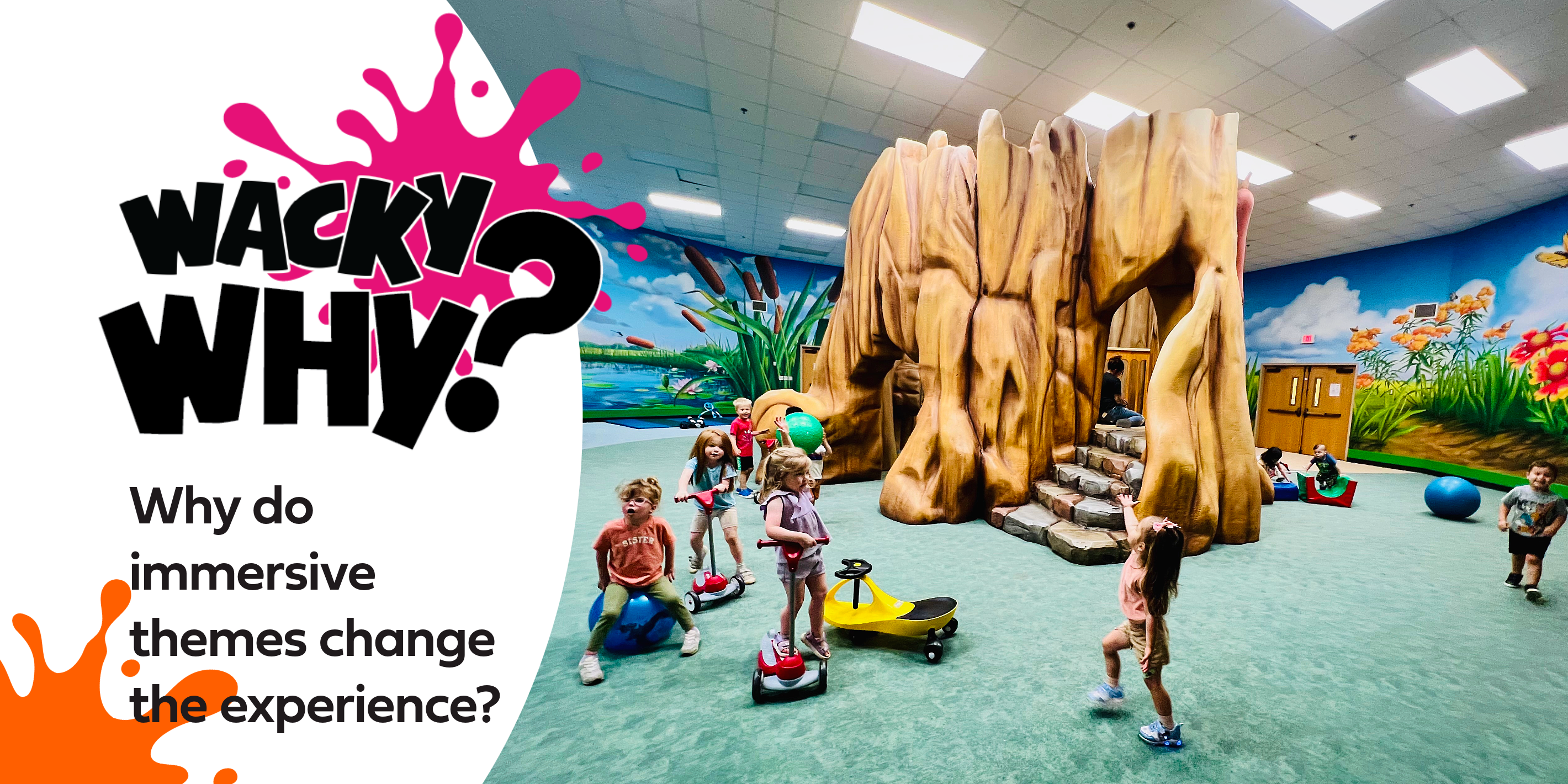
Why does a child breeze past a perfectly nice room… but slow down, and maybe even stop in their tracks, when the space looks and feels like a pirate ship, a forest trail, or a secret hideout?
The square footage didn’t change.
The function probably didn’t change.
But the experience did.
That’s the power of immersive theming.
It’s no longer just a room with nice finishes. Not just a space that looks good. It’s a whole different world that invites you in.
They Change how kids engage
Adults tend to assess rooms logically. Is there enough seating? Is the layout efficient?
Kids respond differently. They react to atmosphere. To scale. To color and texture. To the feeling that something interesting might happen here.
Instead of standing in a room and deciding what to do, they’re already inside a setting that suggests movement, curiosity, and story. A winding pathway invites exploration. A tucked-away corner feels like a hideout. A larger-than-life element makes them feel small in the best way.
That changes the level of engagement.
Children tend to linger longer in spaces that offer discovery. They look around. They interact. They return to details they missed the first time. The room becomes active rather than passive.
And that shift — from simply being in a space to exploring it — is where the experience changes most dramatically.
They change how a space functions
There’s sometimes a fear that imaginative environments mean chaos. In reality, well-designed immersive spaces often make things smoother.
In a well-built themed space, different areas naturally suggest different kinds of activity. There are places to gather and places to retreat. Spaces that feel energetic and spaces that feel calm. Pathways that guide movement without needing arrows on the wall.
Kids pick up on those cues quickly.
A quiet, tucked-away corner feels different from an open, expansive area. A low, enclosed space invites a different posture and energy than a tall, bright one. The environment subtly signals what makes sense there.
That doesn’t eliminate structure. It supports it.
Instead of relying entirely on verbal reminders, the design reinforces expectations. The world itself helps shape how it’s used.
And when a space works that intuitively, daily interactions feel smoother. Kids settle in faster. Transitions take less effort. The room feels intentional rather than accidental.
That shift might not be flashy, but it changes the experience for everyone inside it.
They change how kids feel
Children are incredibly perceptive. They may not analyze design choices, but they recognize effort. When a space feels like a world built with intention, children notice.
An immersive themed environment communicates care.
This wasn’t leftover space.
This wasn’t an afterthought.
Someone cared enough to make this special.
That message builds trust. It builds comfort. It builds excitement. It builds belonging.
And when kids feel welcomed and safe, families feel it too. They’re more relaxed. More willing to participate. More excited to return.
They change what lasts
Decorations can be pleasant, but they’re easy to forget.
Experiences stick.
An immersive environment becomes part of a child’s memory. It’s the forest room they loved. The storybook corner they always chose. The place that felt different from everywhere else.
Spaces built around imagination and storytelling tend to hold up over time because they aren’t tied to short-lived trends. They’re rooted in ideas children have always connected with — exploration, discovery, wonder.
Kids grow.
New families arrive.
The space still works.
Why that change matters
When you choose to create an immersive space, you’re not choosing “more stuff.” You’re choosing to shape how the space is experienced.
You’re choosing:
- deeper engagement
- clearer purpose
- stronger emotional connection
- a place kids are excited to come back to
Decoration can brighten a room.
Immersive theming builds an experience.
And experiences are what people come back for.
If you can dream it, we can theme it!
This article was co-written with human creatives and AI tools. Photo/video credits: Wacky World Studios, Charles Coleman Photography, and Special Care, Inc.