

ABCs of Theming
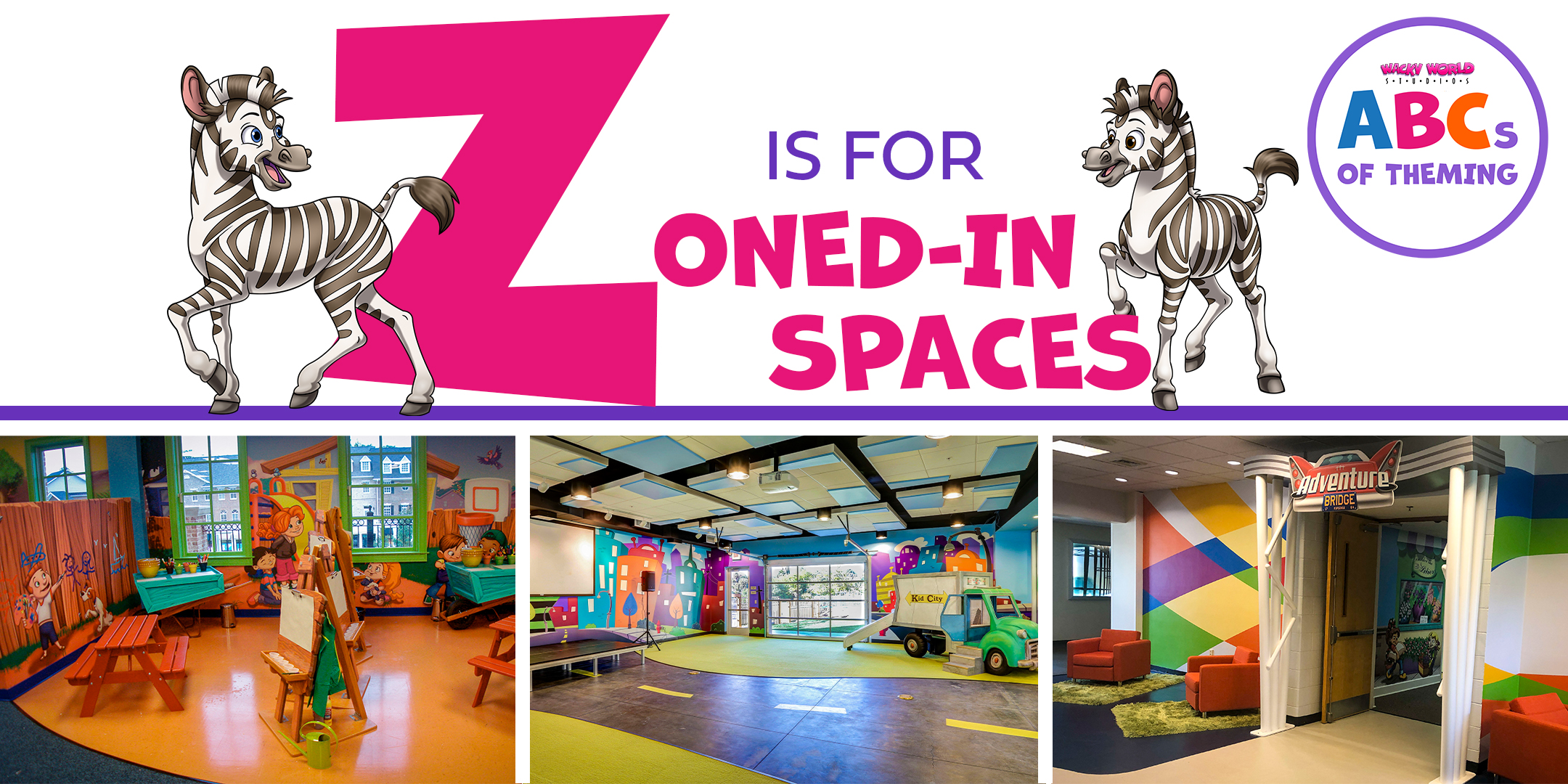
Z is for Zoned-In Spaces: Because Kids Need Freedom and Boundaries too
December 15, 2025
In a well-themed environment, every space has a purpose not just in how it looks, but in how it functions.
Zoned-in spaces create rhythm. They guide movement, reduce chaos, and help kids shift from one mode to another — from wild play to focused learning, from social time to quiet time. When done right, zones make a space feel effortless, even if it’s full of energy.
Zoning isn’t about restricting kids. It’s about giving them an intuitive, visual map for how to use the space — and making sure every part of the environment supports what’s happening there.
What are Zoned-In Spaces?
Zoned-in spaces are clearly defined areas, each with its own visual identity, purpose, and “vibe.” They may be distinct rooms or open-concept zones, but the goal is the same: to provide structure without sacrificing flexibility.
For example:
- A reading nook tucked under a tree canopy mural
- A loud, active play area marked with bold patterns and movement-friendly flooring
- A calm-down corner with soft textures, muted lighting, and comforting characters
- A hands-on learning space with clean lines, supplies within reach, and visual focus
Each zone speaks its own visual language — and together, they form a complete, balanced experience.
Why Zoning Matters
Especially in children’s environments, flow and function can make or break a space. Zoned design helps:
- Reduce sensory overload by organizing energy levels across the room
- Support behavior cues — kids learn what kind of play is expected in each zone
- Increase independence by making transitions smoother and choices clearer
- Maximize the theme by allowing different parts of a story or environment to unfold room by room
- Improve staff efficiency with clearer supervision lines and traffic control
Zoning is what lets a themed environment feel both magical and manageable.
How to Create Zoned-In Spaces
Strong zoning uses a mix of visual cues, layout strategy, and thematic consistency to create separation — even in open-plan rooms.
Here’s how it’s done:
- Color coding – Use distinct palettes or accent colors to define zones
- Themed shifts – Move from one scene to another (e.g., jungle to beach to sky)
- Flooring and lighting – Changes in material or light tone signal new activity areas
- Furniture placement – Low shelves, seating clusters, or soft dividers naturally guide flow
- Signage and symbols – Icons or themed characters can signal what happens in each zone
Zones can blend or contrast — the key is clarity. Kids should feel the shift, even if no one explains it.
One Space, Many Functions
Zoning is especially powerful in shared or multi-use environments. One large room can become three distinct areas: a social space, a quiet retreat, and a learning hub — all without walls.
With thoughtful design, a single theme can support multiple moods. A forest, for example, can have an active trail zone, a cozy den, and a campfire circle — each visually distinct but still part of the same world.
This keeps the space adaptable, while still grounded in story and purpose.
Z is for Zoned-In — and Zero Guesswork
The best themed environments don’t leave kids guessing. They invite them in, guide them gently, and give them the freedom to play, learn, and explore — all within a structure that makes sense to them.
Zoning creates that structure. It reduces friction, lowers stress, and makes every part of the space feel intentional. Not just decorated — but designed with real care.
So go ahead: divide up the magic. Create zones that speak different languages. Let the story unfold one area at a time.
Because when every zone has a purpose, the whole space comes alive.
If you can dream it, we can theme it!
This article was co-written with human creatives and AI tools. Photo/video credits: Wacky World Studios.