

Wacky Why's
Why Do Nature Themes Work So Well in Children's Spaces?
July 22, 2026
Walk into a children's ministry, pediatric waiting room, school, or indoor play space, and chances are you'll find a little bit of nature. Towering trees. Winding trails. Waterfalls. Woodland animals. Flowers, butterflies, birds, and plenty of places that invite kids to explore.
So why do nature themes work so well in children's spaces?
The short answer is that they feel familiar, encourage curiosity, and create immersive environments that children instinctively understand. Designers often refer to this approach as nature-based design, and it's closely related to the principles of biophilic design—the idea that humans are naturally drawn to the sights, patterns, and forms found in nature. While design trends come and go, nature continues to resonate with children in ways that few other themes can.
Kids Are Natural Explorers
Long before children can read a map or understand a storyline, they're already exploring the world around them.
They climb rocks. Turn sticks into swords. Collect interesting leaves. Peek under logs. Chase butterflies. Build forts from branches. Every walk outside becomes a chance to discover something new.
Nature is the original playground.
That's why nature-themed children's spaces feel so intuitive. Children don't need someone to explain what to do in a forest, beside a stream, or around a giant tree. Their imagination immediately fills in the rest.
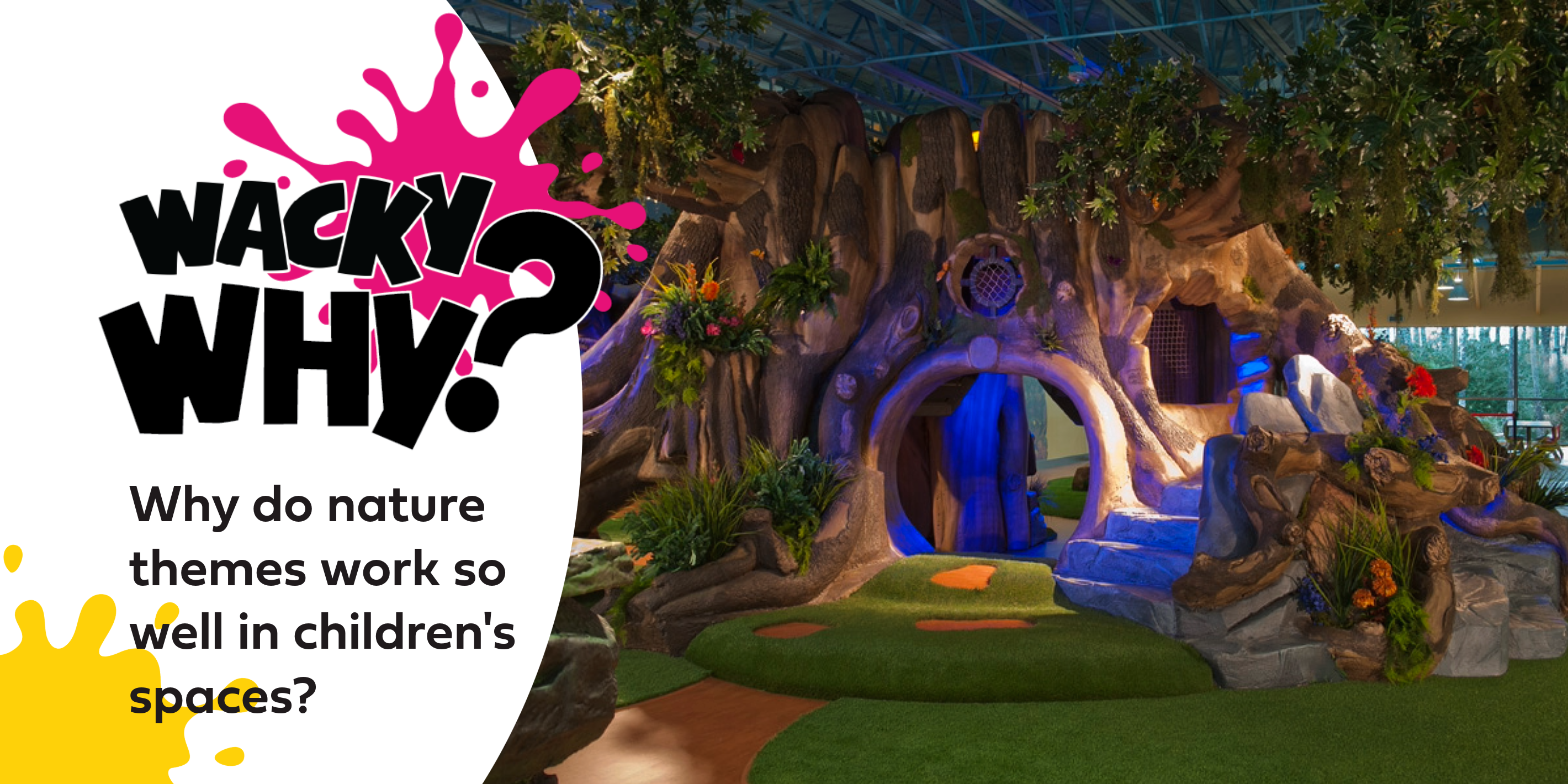
That's also why so many nature-inspired environments include oversized trees, caves, waterfalls, winding paths, and other features that encourage movement and exploration. They're inspired by the kinds of places children are already drawn to outdoors.
Nature Invites Endless Stories
Some themes come with a built-in storyline. Once you've explored every corner, you've experienced the adventure.
Nature works a little differently.
One day, a hollow tree might become a woodland hideout. The next, it's the entrance to a secret kingdom. A cave could shelter a family of bears or hide long-lost treasure. A mountain trail might lead to a campsite, a castle, or somewhere no one has imagined yet.
Nature provides the setting, but children create the story.
Hidden details make those stories even more rewarding. Whether it's a woodland animal tucked into the scenery or a reflection painted into a quiet stream, children often notice something new with each visit. It's one more reason nature-themed children's spaces continue to feel fresh long after opening day.
There's Science Behind It
This is where biophilic design comes into the picture.
Biophilic design is based on the idea that people have an innate connection to the natural world. Research has shown that natural elements can help reduce stress, improve mood, support focus, and create a greater sense of comfort. In pediatric healthcare design, nature-inspired environments have even been associated with helping reduce anxiety for children and their families.
For children, those benefits can translate into spaces that feel less intimidating, more welcoming, and more inviting to explore.
The best part? You don't need an actual forest growing inside the building.
Natural colors, organic shapes, flowing forms, wildlife, landscapes, and immersive themed environments can all help create that same connection to nature, even when you're indoors.
Every Forest Can Be Different
Nature may be familiar, but it's never one-size-fits-all.
The best nature themes don't just bring the outdoors inside—they celebrate the outdoors that already exists outside the front door.
That's one of the reasons every project begins with a little local research. Instead of creating a generic forest, there's an opportunity to celebrate what makes each community unique. At Special Care Inc. in Oklahoma City, the murals feature native prairie flowers, insects, birds, and wildlife, giving young patients something familiar to recognize and discover. At Flat Creek Baptist Church in Georgia, local landmarks and landscapes were incorporated into the woodland murals, along with hidden details that reward children who take the time to look a little closer.
Those local details don't just make a space feel more authentic—they also give children something new to discover every time they visit.
It Works Just About Everywhere
Some themes only fit certain types of projects.
Nature seems to fit almost all of them.
Whether it's a children's ministry, pediatric healthcare facility, school, library, recreation center, or indoor play environment, nature-based design creates spaces that feel welcoming, engaging, and timeless.
It can be peaceful without feeling quiet.
Adventurous without feeling overwhelming.
Familiar without ever becoming ordinary.
So…Why Does Nature Keep Showing Up?
The answer is actually pretty simple.
Nature has been inspiring children's play long before anyone coined the term biophilic design.
It's the original playground.
Maybe that's the real answer to the question.
Nature themes work so well in children's spaces because they tap into something that's already there. Children are naturally curious about the outdoors. Good design simply gives that curiosity a place to grow.
Maybe that's why so many nature-inspired projects feature towering trees, waterfalls, woodland trails, caves, native wildlife, and other natural elements. Each one looks a little different, but they all have the same goal: creating a place where children feel comfortable enough to explore, curious enough to learn, and excited enough to come back.
Design trends will continue to change. New colors, new characters, and new ideas will always come along. But as long as kids are fascinated by climbing trees, watching butterflies, splashing through streams, and wondering what's around the next bend, nature will always feel right at home.
If you can dream it, we can theme it!
This article was co-written with human creatives and AI tools. Photo/video credits: Wacky World Studios, Charles Coleman Photography, and Special Care, Inc.