

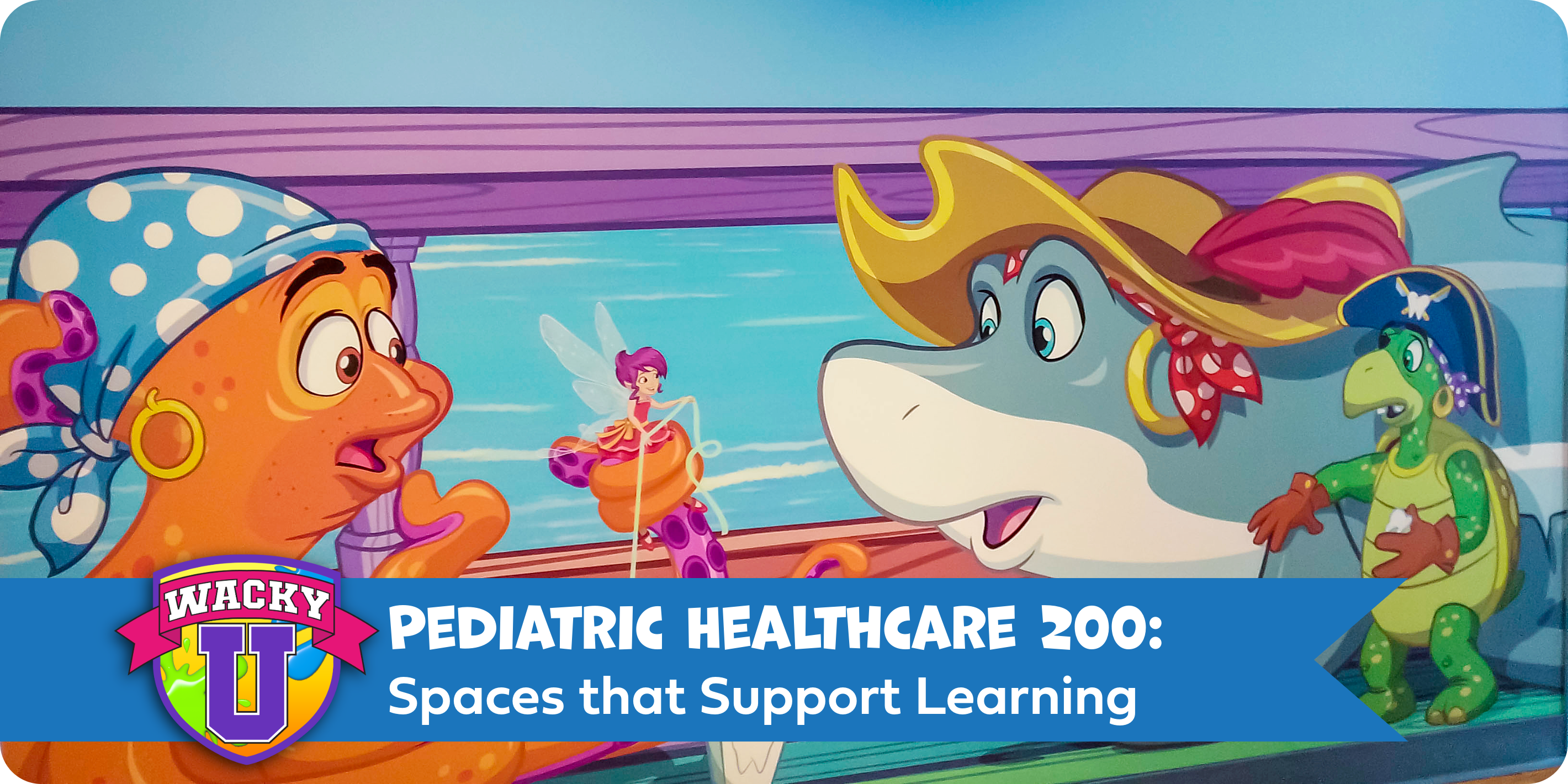
Pediatric healthcare environments occupy a unique intersection between clinical function and developmental experience. Unlike adult patients, children interpret space not only through comfort and efficiency, but through curiosity, imagination, and emotional response.
Traditionally, waiting areas in pediatric offices, dental clinics, and hospitals have been designed primarily for distraction. Toys, screens, and bright colors serve a purpose, but they often stop short of leveraging the full cognitive and emotional potential of the environment.
Emerging research in environmental psychology and pediatric care suggests a broader opportunity: healthcare spaces can be intentionally designed to support informal learning, reduce anxiety, and improve patient cooperation.
Course Syllabus
Why Pediatric Environments Matter More Than We Think
- Children are Interpreting, Not Just Waiting
- Anxiety Affects More Than Emotions
Moving Beyond Distraction to Engagement
- Distraction Has Limits
- Engagement Supports Coping and Understanding
What "Learning" Looks Like in Pediatric Spaces
- Learning Is About Reducing Uncertainty
- Interactive Features That Support Agency
- Visual Communication That Prepares and Reassures
- The Role of Themed Environments
Designing With the Child's Perspective in Mind
- What Children Need From Healthcare Spaces
- Supporting Emotional and Cognitive Needs Together
The Role of Play as a Learning Tool
- Play as a Core Care Strategy
- Learning Through Play
From Waiting Rooms to Learning Environments
- A Shift in Design Thinking
- Practical Applications
Designing for Understanding, Not Just Distraction
Why Pediatric Environments Matter More Than We Think
Children Are Interpreting, Not Just Waiting
Children don’t enter healthcare environments with the same understanding as adults. What may seem routine to a provider can feel unfamiliar and unpredictable to a child.
Research shows that this uncertainty is a major driver of anxiety. Leading pediatric healthcare researcher, Julie Lerwick, explains that pediatric healthcare-induced anxiety and trauma are often linked to a child’s lack of understanding, limited control, and difficulty predicting what will happen next (Lerwick, 2016).

Anxiety Affects More Than Emotions
This anxiety has tangible effects on care. Elevated stress in pediatric patients has been associated with:
- Increased perception of pain
- Reduced cooperation
- More difficult clinical interactions
Research further shows that hospitalized children experience significantly higher anxiety levels, reinforcing the importance of environments that support emotional regulation. (Delvecchio et al., 2019)
Moving Beyond Distraction to Engagement
Distraction Has Limits
Many pediatric environments rely on distraction as the primary strategy. While distraction can reduce immediate distress, it is often passive and temporary.
It does not help children understand what is happening around them.
Engagement Supports Coping and Understanding
A more effective approach is active engagement through play and exploration.
A recent scoping review found that play interventions in pediatric healthcare are used not only for distraction, but also for:
- Preparing children for procedures
- Supporting emotional coping
- Facilitating understanding of medical experiences
These interventions were consistently associated with reductions in anxiety, stress, and pain. (Gjaerde LK et al., 2021)
Similarly, the Association of Child Life Professionals highlights that therapeutic play helps children process unfamiliar experiences and develop a sense of control—both critical factors in reducing distress.
What "Learning" Looks Like in Pediatric Spaces
Learning Is About Reducing Uncertainty
In pediatric healthcare environments, learning is not about formal instruction. It is about helping children understand what is happening.
Lerwick emphasizes that reducing anxiety depends on increasing predictability and supporting a child’s sense of control. When children understand what to expect, their experience becomes less threatening. (Lerwick, 2016)
This makes learning a functional tool within the environment.
Interactive Features That Support Agency
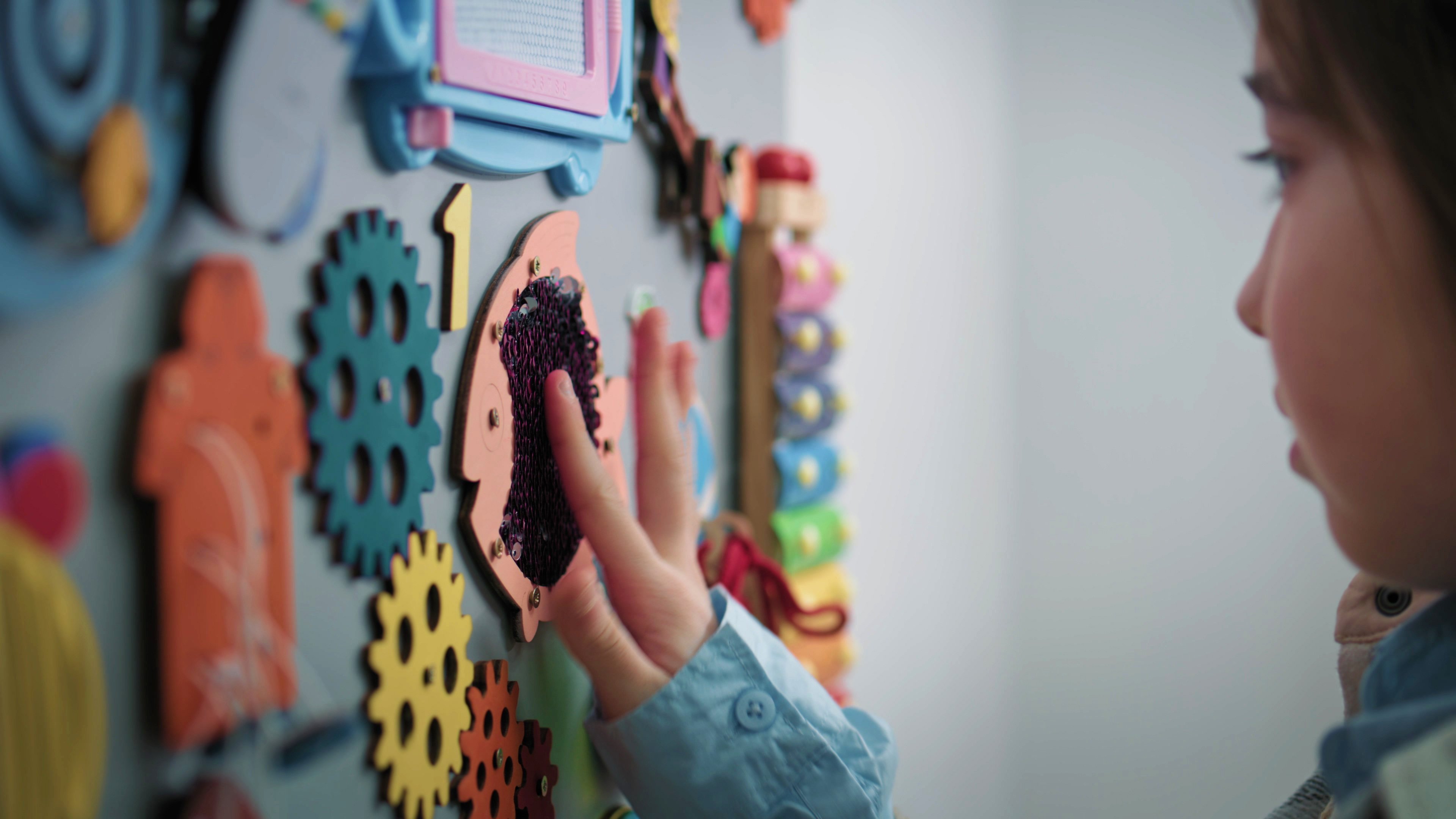
Hands-on elements—such as interactive walls, tactile features, and simple cause-and-effect installations—allow children to engage actively with their surroundings.
Therapeutic play research shows that active participation helps children feel more in control, which directly reduces anxiety and improves coping (Association of Child Life Professionals).
Visual Communication That Prepares and Reassures
Clear, visual explanations can make unfamiliar experiences more predictable.
Examples include:
- Step-by-step illustrations of procedures
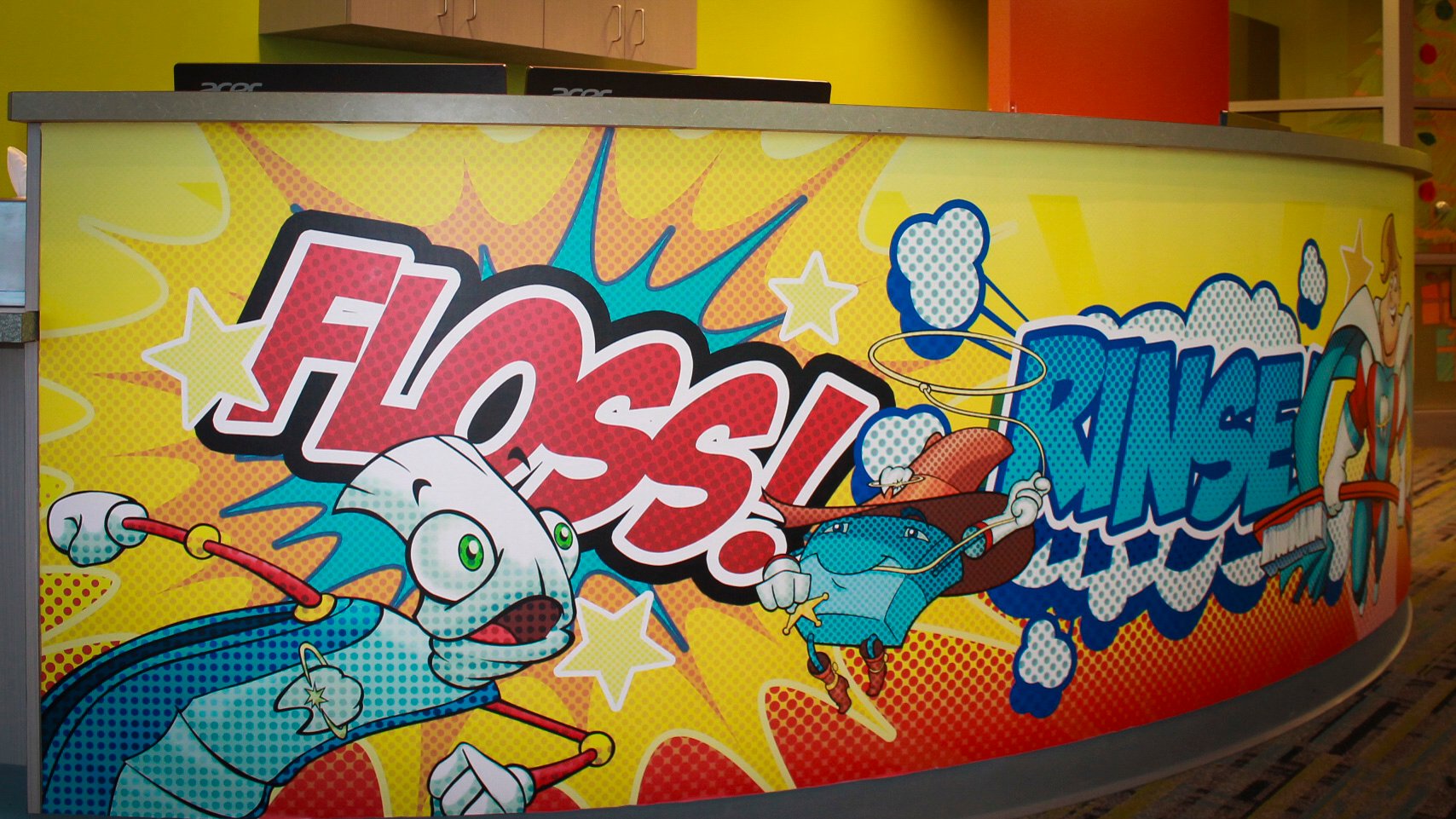
- Friendly characters modeling medical experiences
- Simple explanations of tools and equipment
Lerwick highlights that preparation and clear expectations are key components of emotionally safe care. (Lerwick, 2016) Visual communication within the environment can reinforce those principles in a way that is accessible to children.
The Role of Themed Environments
Themed environments are widely used in pediatric design, but their potential often goes beyond aesthetics.
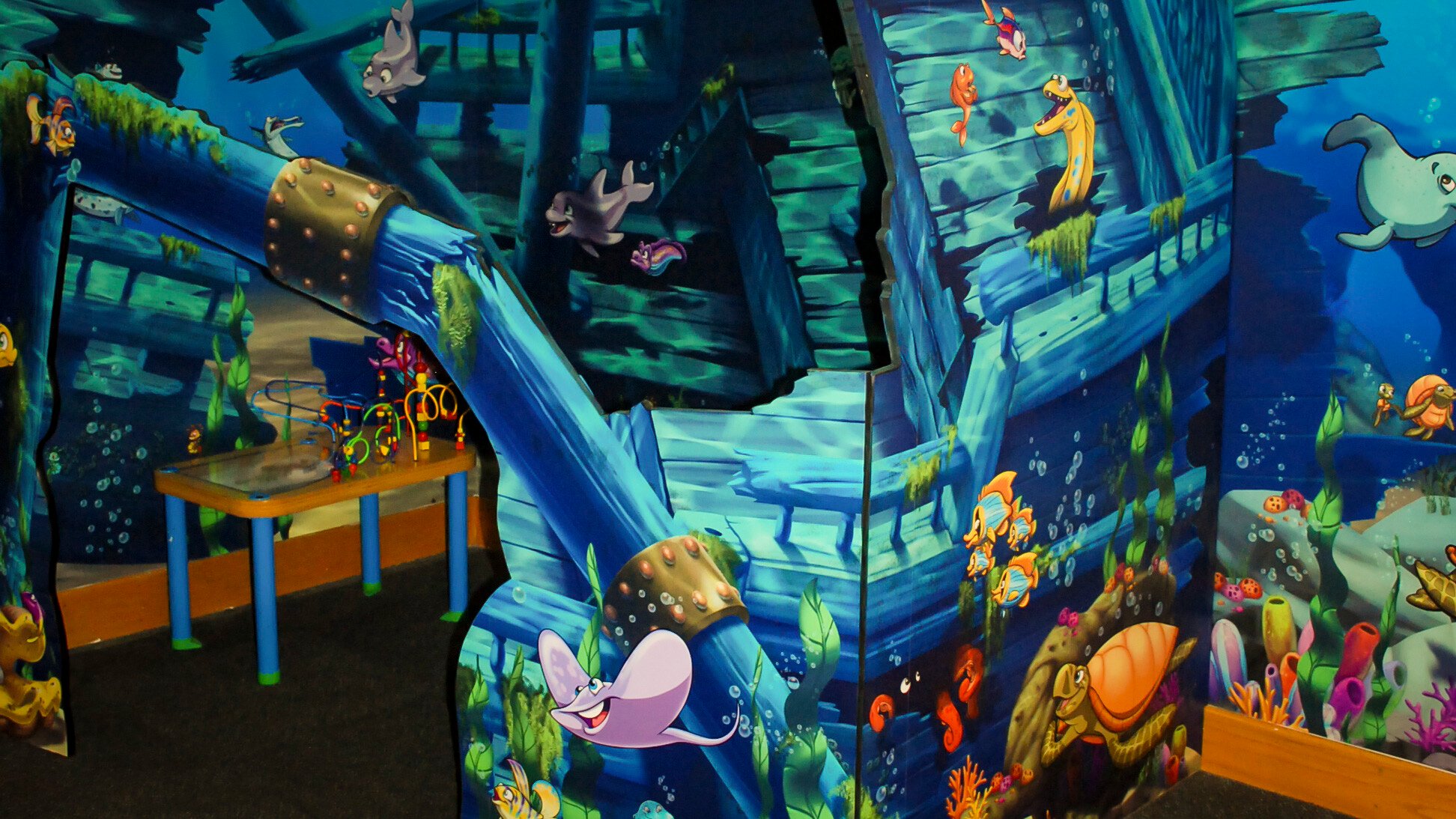
When themes include embedded learning—such as storytelling, health concepts, or exploratory elements—they help children engage with and better understand their surroundings.
This aligns with broader findings that children use play and imagination to process stressful experiences (Delvecchio et al., 2019).
Designing With the Child's Perspective in Mind
What Children Need From Healthcare Spaces
Children actively interpret healthcare environments, and their needs are not always aligned with adult assumptions.
Another recent scoping review shows that environments that include opportunities for play and engagement support children’s emotional, cognitive, and social well-being (Yu et al., 2024).
This reinforces the importance of designing spaces that feel clearly intended for children.
Supporting Emotional and Cognitive Needs Together
Understanding and comfort are closely connected.
Lerwick identifies several factors that contribute to emotionally safe pediatric care:
- Clear communication
- Predictable experiences
- Opportunities for participation
When environments integrate learning and interaction, they support all three (Lerwick, 2016.)
The Role of Play as a Learning Tool
Play as a Core Care Strategy
Play is not just a feature of pediatric environments. It is a core component of how children cope with healthcare experiences.
The Association of Child Life Professionals identifies therapeutic play as essential for:
- Reducing anxiety
- Supporting coping
- Helping children understand medical procedures
Learning Through Play
Research further emphasizes that play in healthcare environments supports:
- Emotional regulation
- Cognitive development
- Social interaction
Through play, children actively process and make sense of their experiences (Yu et al., 2024).

From Waiting Rooms to Learning Environments
A Shift in Design Thinking
The goal is not to eliminate distraction, but to build beyond it.
Instead of asking, How do we keep children occupied? a more effective question is: How do we help children understand and engage with this experience?
Practical Applications
This shift can take many forms:
- Interactive walls that combine play with simple educational content
- Themed environments that guide exploration and storytelling
- Visual explanations of procedures and tools
- Digital interactives that encourage participation
Each of these elements helps transform passive waiting into meaningful engagement.
_1.jpg?width=3648&height=2052&name=DrStettlerPedDent_061%20(2)_1.jpg)

-1.jpg?width=2736&height=3648&name=DrStettlerPedDent_071%20(2)-1.jpg)
.jpg?width=2736&height=3648&name=DrStettlerPedDent_069%20(2).jpg)
Designing for Understanding, Not Just Distraction
Children in healthcare environments are constantly trying to interpret what they see and experience.
When design focuses only on distraction, those moments remain uncertain.
When design incorporates learning—through play, interaction, and clear communication—those same moments become understandable.
And when children understand their environment, they are more likely to feel safe within it.
Stay in the know with Wacky World Studios! We're here to help you with all stages of your theming journey. Make sure you sign up for our monthly newsletter and subscribe to this blog for even more handy theming resources and information. You can also find lots of great inspiration by following us on social media. Our Pinterest and Instagram pages are overflowing with photos and ideas.
And for you DIYers, be sure to check out our online shop at WackyWorldDIY.com.
This article was co-written with human creatives and AI tools, and the content was checked for clarity and accuracy. Photo/video credits: Wacky World Studios, Kids Dentistry of North Georgia, and Adobe Stock.