

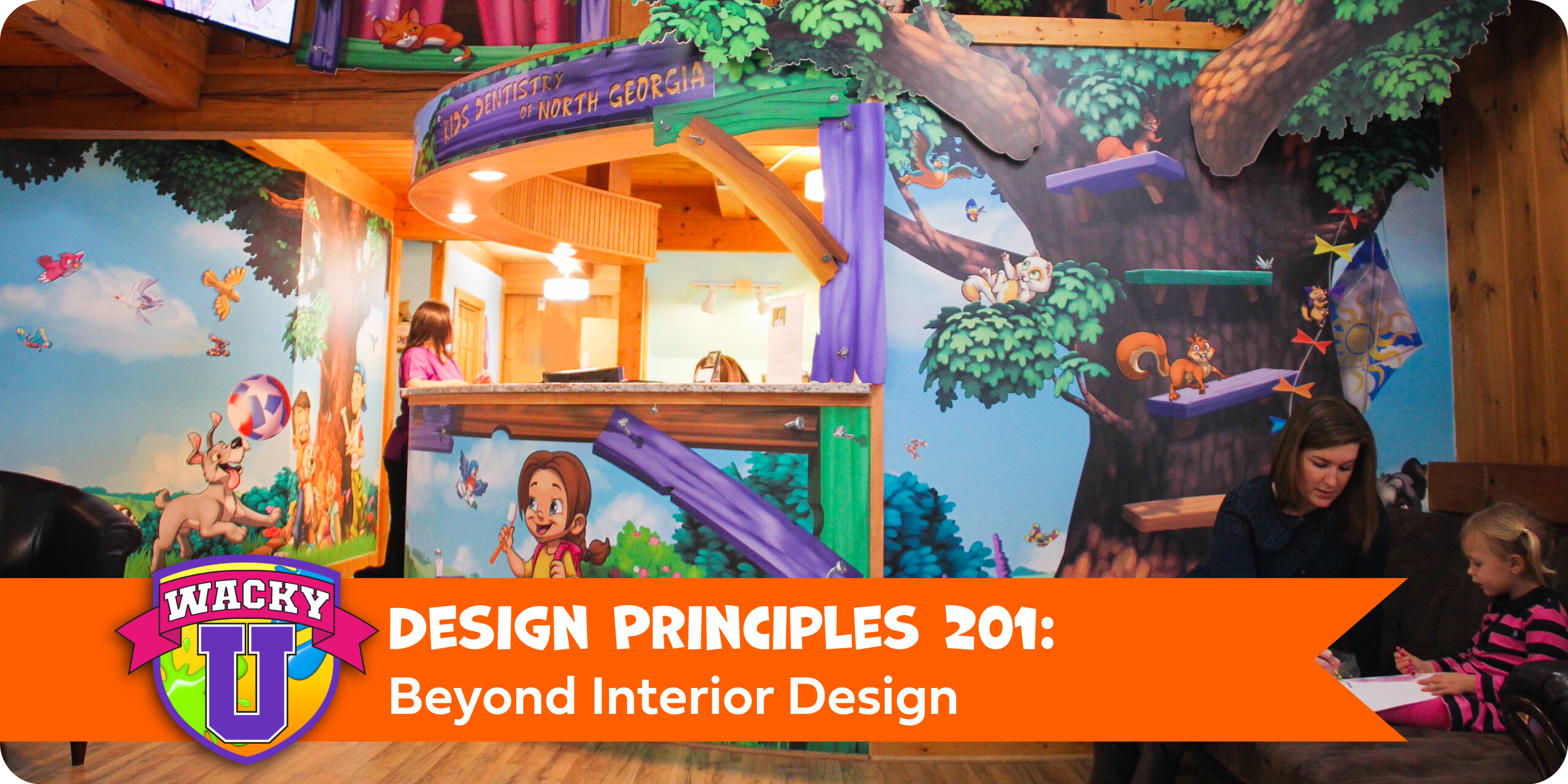
Over the last decade, many organizations that serve children have made welcome improvements to their spaces. Churches have upgraded kids’ areas. Pediatric clinics have moved away from sterile waiting rooms. Schools and community centers have invested in better furniture, lighting, and finishes.
Much of this progress comes from thoughtful interior design. And interior design absolutely matters.
But as trends shift toward modern, minimalist aesthetics, an important question is starting to surface:
Are we designing spaces that simply look good to adults — or spaces that truly work for children?
To answer that, we need to understand the difference between interior design and immersive theming, and why those two approaches lead to very different outcomes for kids.
Course Syllabus
Interior Design: Necessary, Valuable, but Often Adult-Centered
- Interior Design as the Foundation of Children's Spaces
- What Interior Design Does Well for Kids
The Rise of Modern, Minimalist Design — and Its Limitations for Kids
- When Modern Design Trends Shape Children's Environments
- The Limits of Minimalism in Child-Centered Spaces
Immersive Theming: Designing for Meaning, Not Just Appearance
- Immersive Theming as Environmental Storytelling
- How Themed Environments Invite Participation
Design vs. Theming: A Functional Comparison
- Two Different Goals: Optimization vs. Experience
- Where Design Ends, and Experience Begins
Why This Difference Matters in Real-World Children's Spaces
- Churches: Teaching Through Place and Story
- Pediatric Healthcare: Reducing Anxiety Through Engagement
- Education: Learning in Context, Not in Isolation
- Parks & Recreation: Spaces That Invite Return and Belonging
Timelessness vs. Trend: A Long-Term Perspective
- Design Trends Change. Childhood Needs Don't.
Design as a Starting Point, Experience as the Outcome
Interior Design: Necessary, Valuable, but Often Adult-Centered
Interior Design as the Foundation of Children’s Spaces
Interior design focuses on the physical environment: layout, materials, furniture, color, lighting, acoustics, and circulation. In children’s spaces, good interior design prioritizes:
- Safety and durability
- Age-appropriate scale and ergonomics
- Visual calm and organization
- Ease of supervision and maintenance
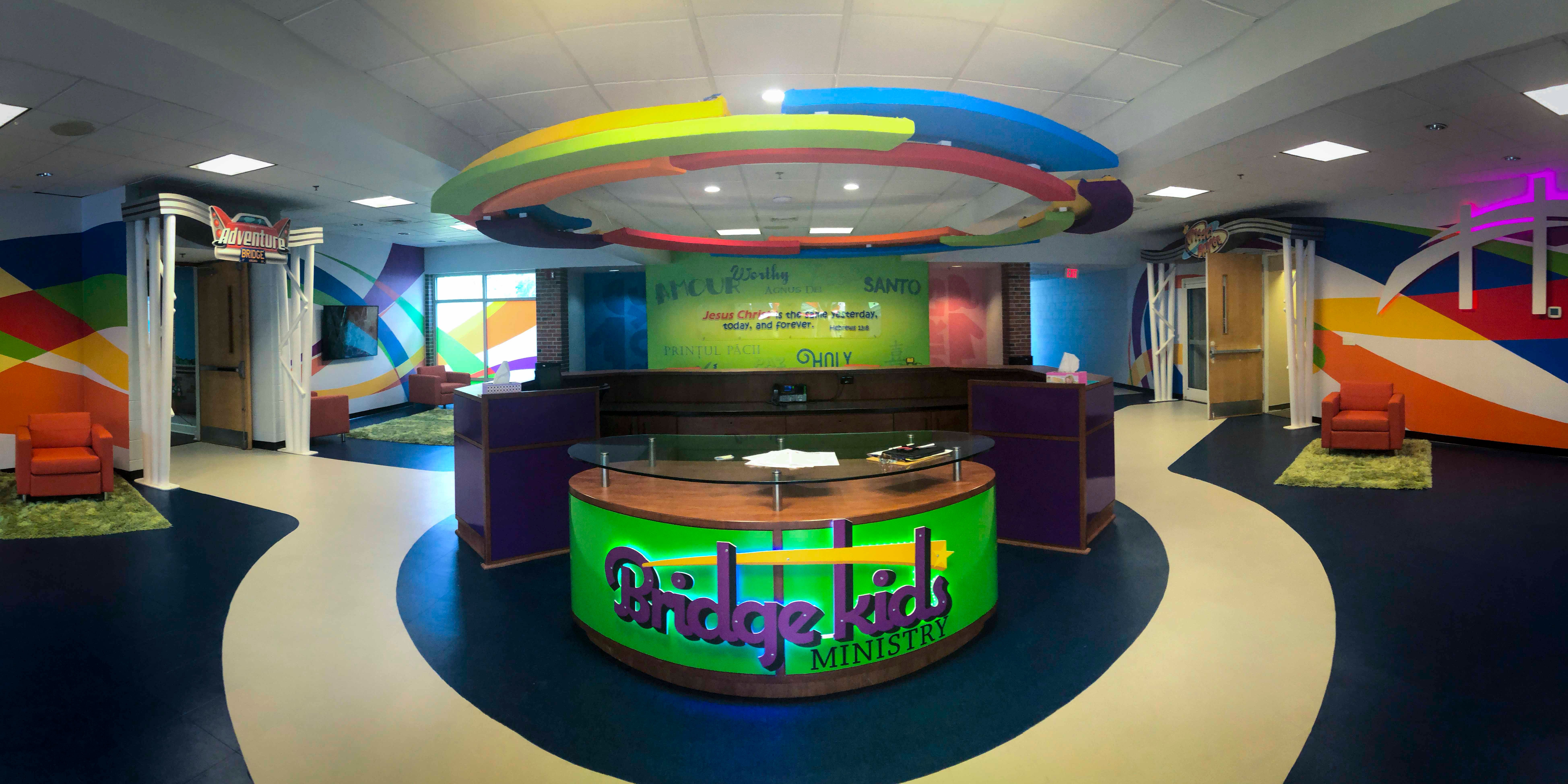
There’s strong research showing that these elements affect children’s well-being. Studies in environmental psychology and pediatric healthcare design demonstrate that the built environment can influence stress levels, mood, and behavior in children.
For example:
- Research focused on children’s spatial experience emphasizes the importance of designing environments from a child’s perspective. A study published in Engineering Proceedings examining children’s interactions with space notes that “it is necessary to create enabling environments from a child’s perspective as space is significant for them.” This reinforces the idea that children do not experience space as a neutral backdrop, but as an active part of how they engage, explore, and make meaning within an environment. (Rucitra et al., 2024)
- A systematic review examining school indoor visual environments found that characteristics such as lighting, spatial arrangement, visual complexity, and access to natural elements are associated with children’s health, comfort, and overall well-being. The review highlights that interior environmental qualities influence how children feel and function within a space, reinforcing the idea that design decisions affect more than appearance — they shape children’s experience of the environment itself. (Meng et al., 2023)
What Interior Design Does Well for Kids
Interior design lays an essential foundation. A poorly designed space can actively work against children. But even a well-designed interior often stops short of answering a deeper question: What does this space mean to a child?
The Rise of Modern, Minimalist Design — and Its Limitations for Kids
When Modern Design Trends Shape Children’s Environments
Modern interior design trends favor clean lines, neutral palettes, minimal ornamentation, and visual simplicity. These spaces photograph well. They feel calm, organized, and sophisticated. And in many adult environments, that’s exactly the goal.
However, when minimalist principles are applied wholesale to children’s environments, they can unintentionally strip away things children rely on most:
- Visual cues that support imagination
- Context that helps them understand where they are
- Emotional warmth and narrative meaning
While visual simplicity can reduce distraction, research suggests that simplicity alone is not enough to support meaningful engagement for children.
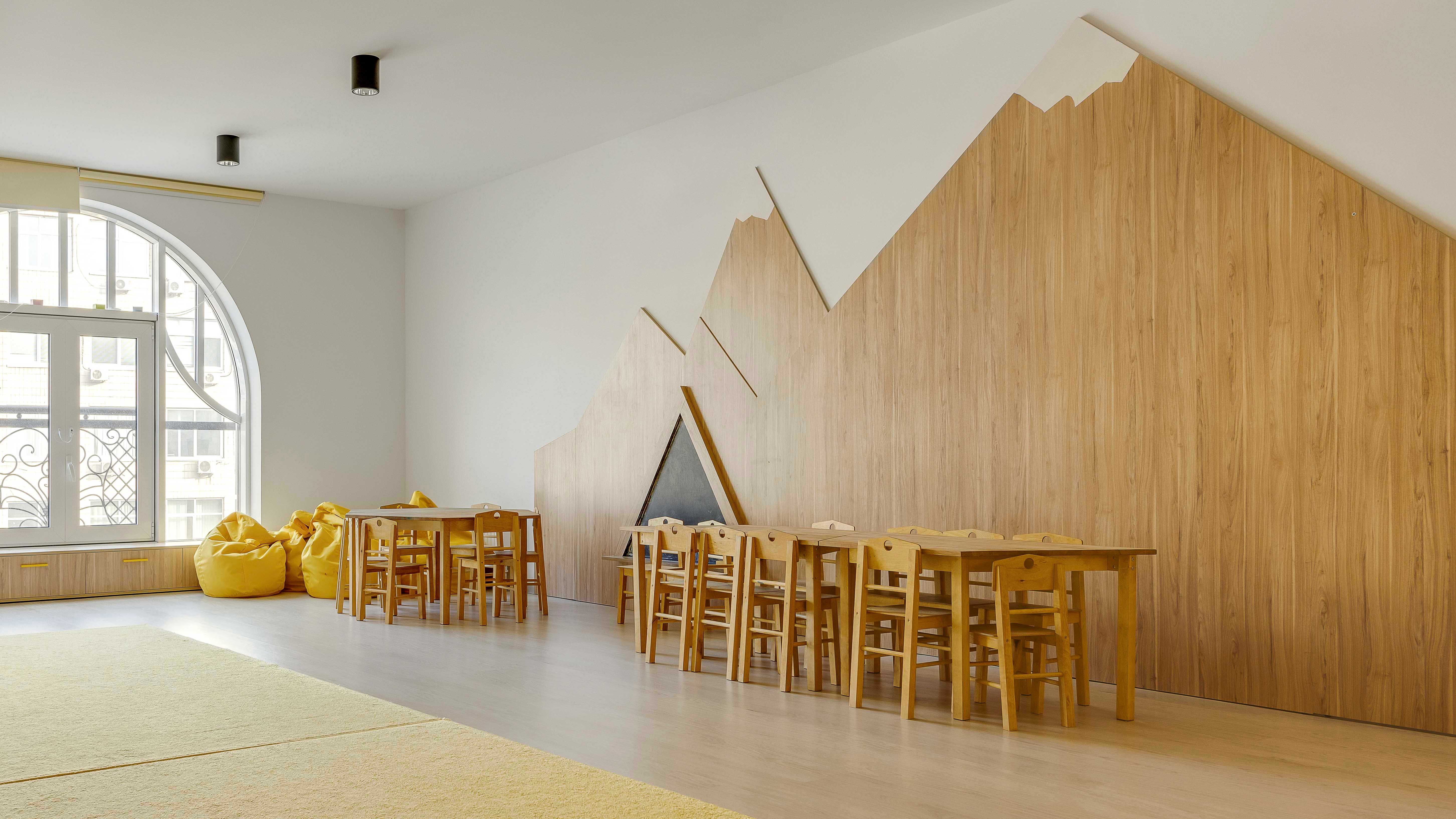
The Limits of Minimalism in Child-Centered Spaces
Child development and environmental psychology research consistently shows that children experience space differently than adults. Children are not looking for aesthetic restraint. They are looking for signals, stories, and permission to play.
Research examining classroom environments has found that extremely sparse spaces can be just as limiting as overly busy ones. A large-scale study on classroom design and learning outcomes found that very low and very high levels of visual complexity both perform poorly, while environments with moderate to richer visual complexity combined with strong coherence support better engagement and learning outcomes. In other words, children benefit from spaces that are interesting and meaningful, not simply minimal. (Barrett et al., 2017)
Additional research on children’s attention supports this balance. Reviews of visual attention in learning environments note that while excessive visual clutter can compete with learning tasks, environments still need intentional visual information to help children orient themselves, maintain interest, and interpret their surroundings. Removing too much visual context can leave children without the cues they use to make sense of a space. (Godwin et al., 2018)
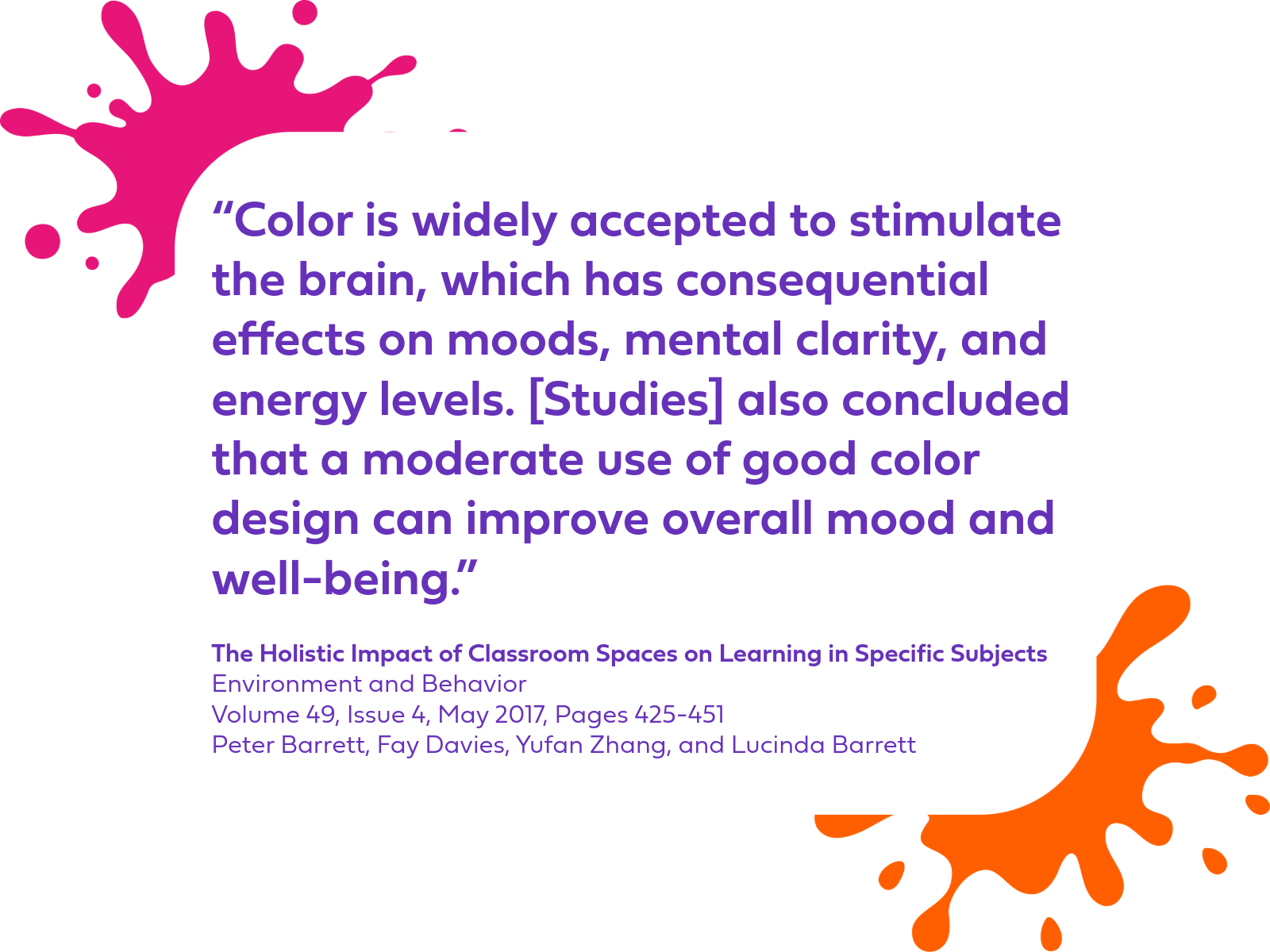
Minimalist interiors may reduce visual noise, but they often leave children without the contextual anchors that help them feel curious, confident, and engaged. For children, visual richness isn’t a distraction when it’s intentional — it’s information.
Immersive Theming: Designing for Meaning, Not Just Appearance
Immersive Theming as Environmental Storytelling
Immersive theming starts from a different place.
Rather than asking, “How should this space look?” it asks,
“What experience should this space create for a child?”
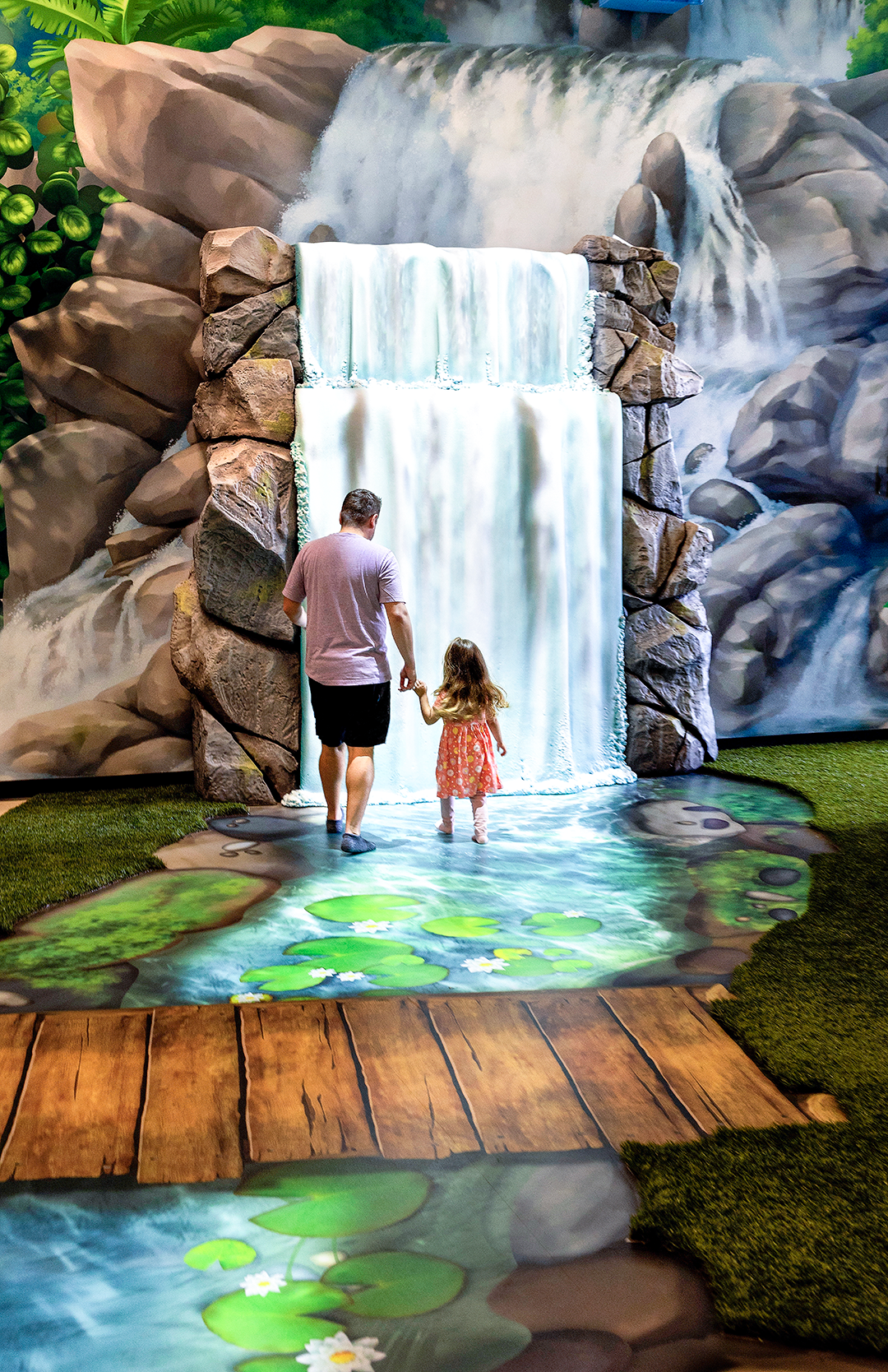
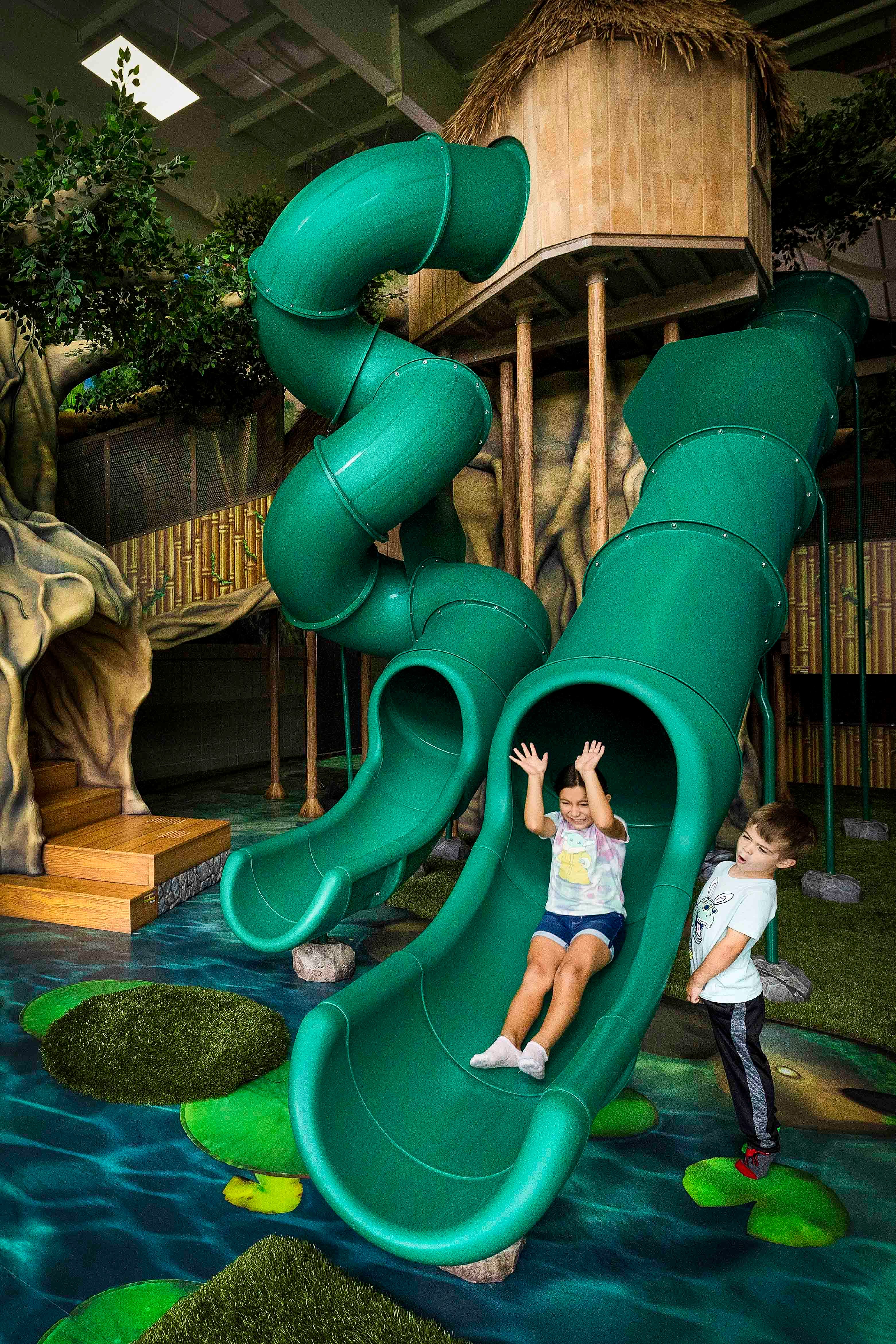
Theming weaves together architecture, color, texture, graphics, props, and spatial layout around a cohesive idea or story. The goal isn’t decoration. It’s environmental storytelling.
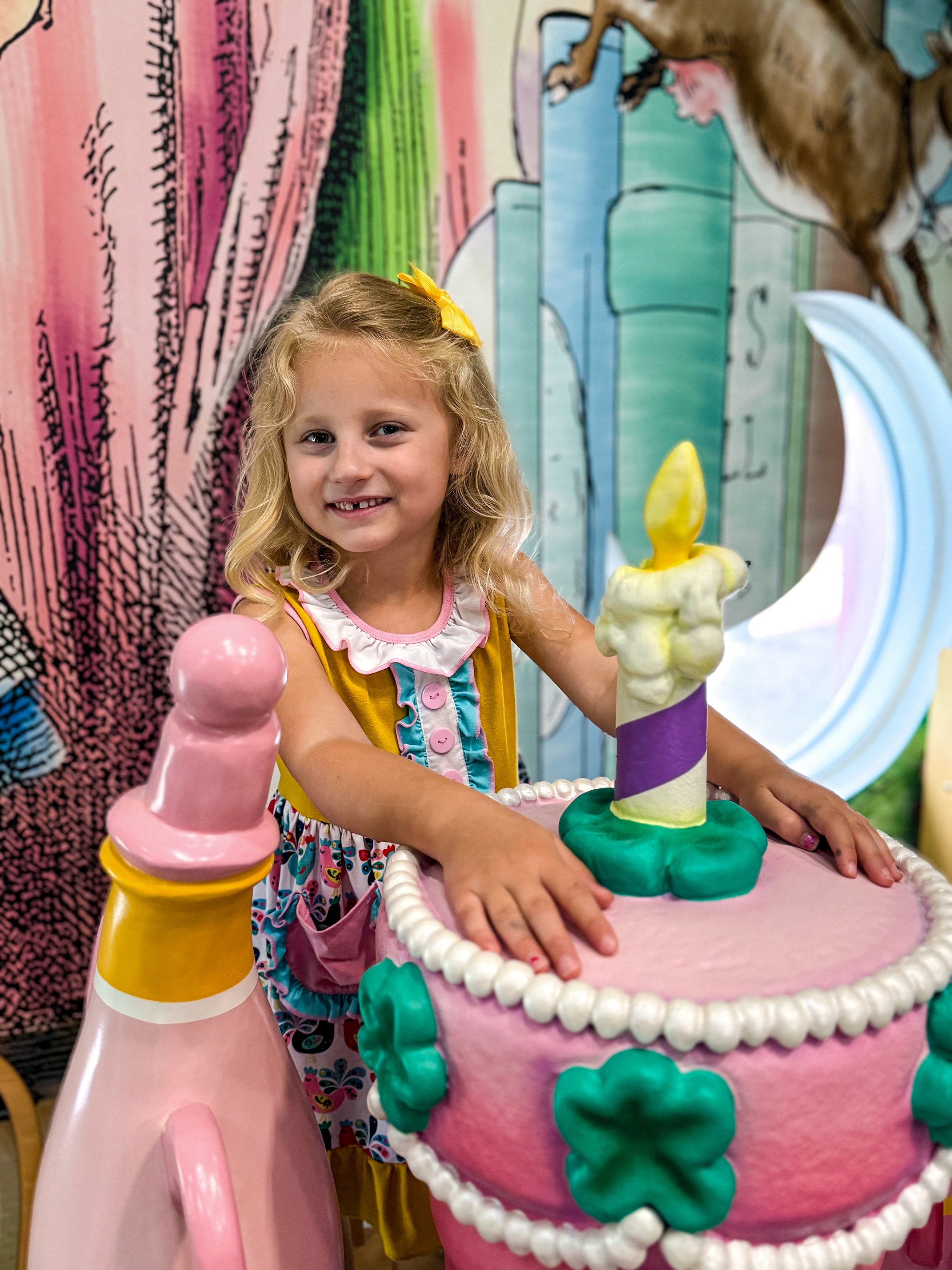
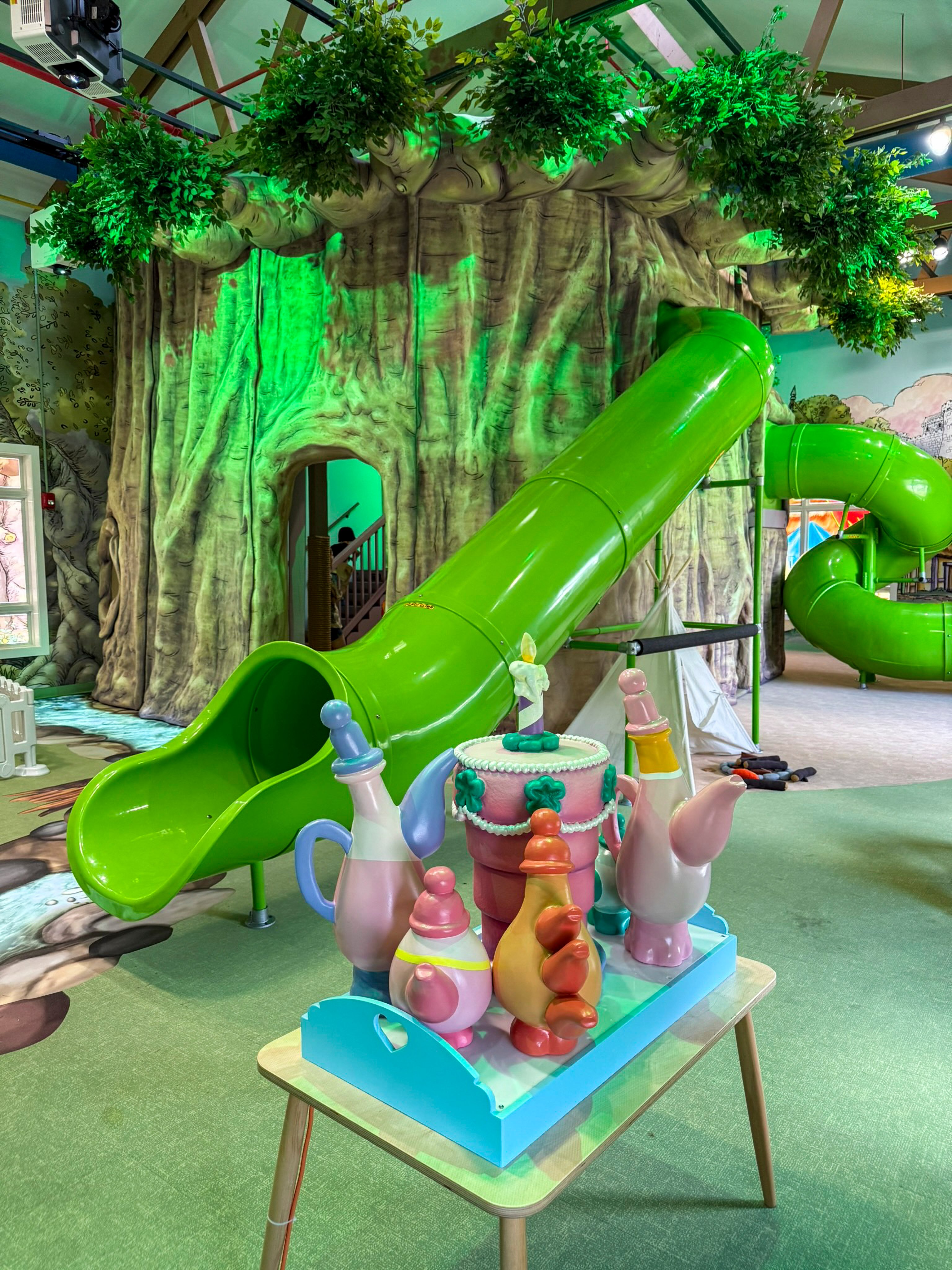

Research examining children’s perspectives on space supports this approach by emphasizing that children actively interpret and respond to their environments. Rather than passively occupying space, children use environmental features to orient themselves, guide their behavior, and make sense of what a place is for. The study highlights that children notice spatial qualities adults may overlook and that these qualities influence how children move, play, and engage within an environment. (Rucitra et al., 2024)
From this perspective, environments that intentionally communicate meaning give children clearer signals about how they can interact with a space. The environment becomes part of the experience, not just the container for it.
How Themed Environments Invite Participation, Not Just Observation
In other words, immersive environments don’t just occupy children. They invite participation.
Rather than relying on signage or adult instruction, immersive spaces communicate through context. Visual and spatial cues help children understand what kind of actions, stories, or roles are possible in a space without needing explanation. This aligns with research showing that children rely on environmental information to guide exploration and play.
When environments provide recognizable forms, patterns, and thematic coherence, children are more likely to engage actively rather than remain passive observers. Participation increases because the space itself answers a child’s unspoken question: “What can I do here?”
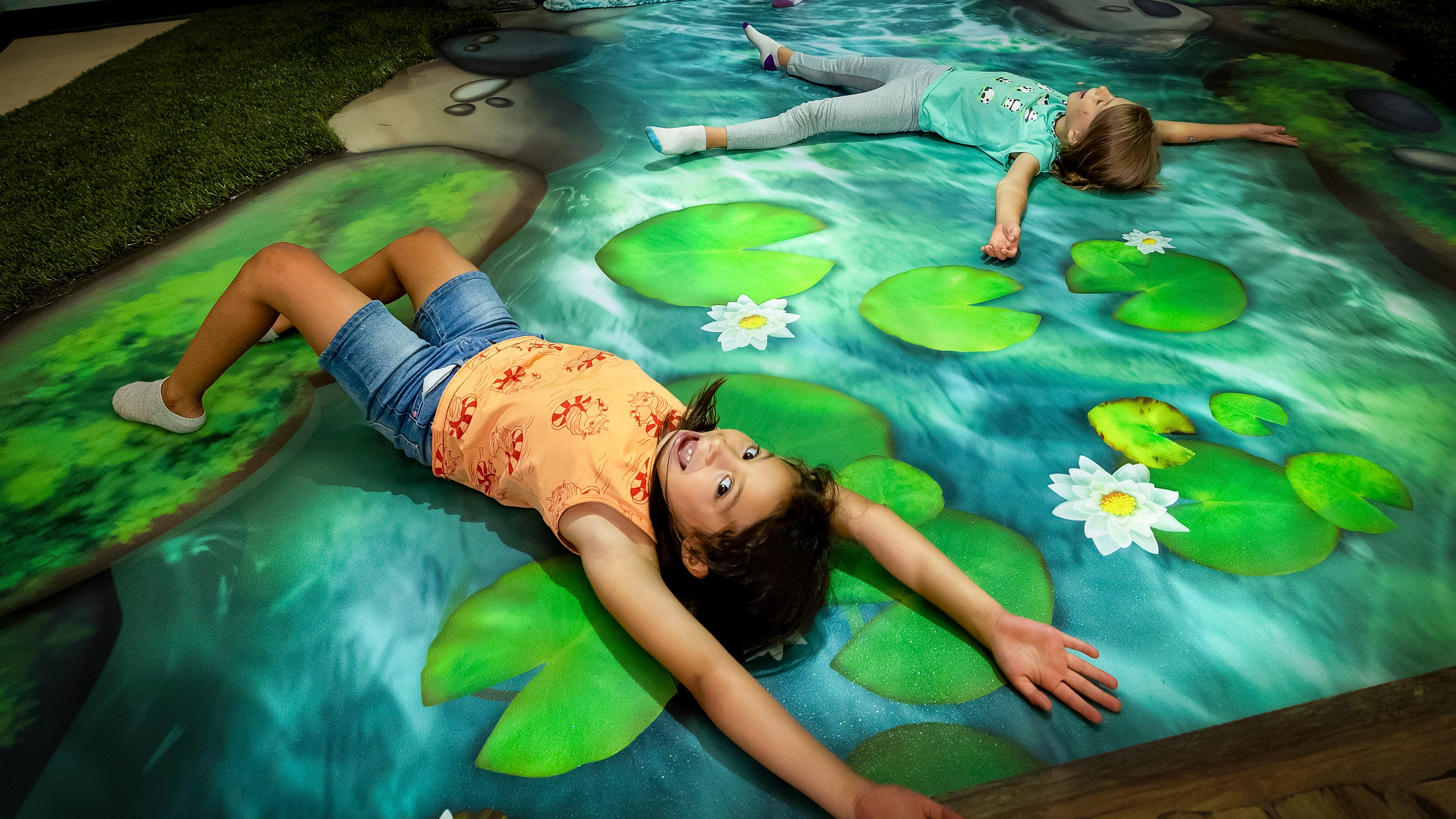
Participation also changes how long and how well children engage. In environments organized around a clear idea or story, children tend to stay focused longer, return more often, and build more complex interactions over time. Simple exploration frequently grows into role-play, storytelling, and social interaction — without additional instruction or programming.
This is especially important in spaces where children are typically asked to wait, behave, or follow adult agendas. In churches and classrooms, themed environments allow children to physically inhabit ideas rather than only hear about them. In parks and community spaces, theming transforms equipment into destinations and shared narratives.
Interior design can support participation by improving comfort and usability. Immersive theming goes a step further by creating permission — permission to imagine, to move, to engage, and to belong in the space.
That difference is subtle, but for children, it’s profound.
Design vs. Theming: A Functional Comparison
Two Different Goals: Optimization vs. Experience
Here’s a practical way to understand the difference:
Interior Design
- Optimizes comfort, safety, and function
- Often reflects adult taste and current trends
- Improves usability and reduces friction
- Creates a pleasant environment
Immersive Theming
- Builds narrative and emotional context
- Reflects how children interpret the world
- Encourages exploration and imagination
- Creates a memorable experience
Where Design Ends, and Experience Begins
Interior design makes a space usable.
Immersive theming makes it meaningful.
And meaning is what drives engagement for children.
Why This Difference Matters in Real-World Children's Spaces
Churches: Teaching Through Place and Story
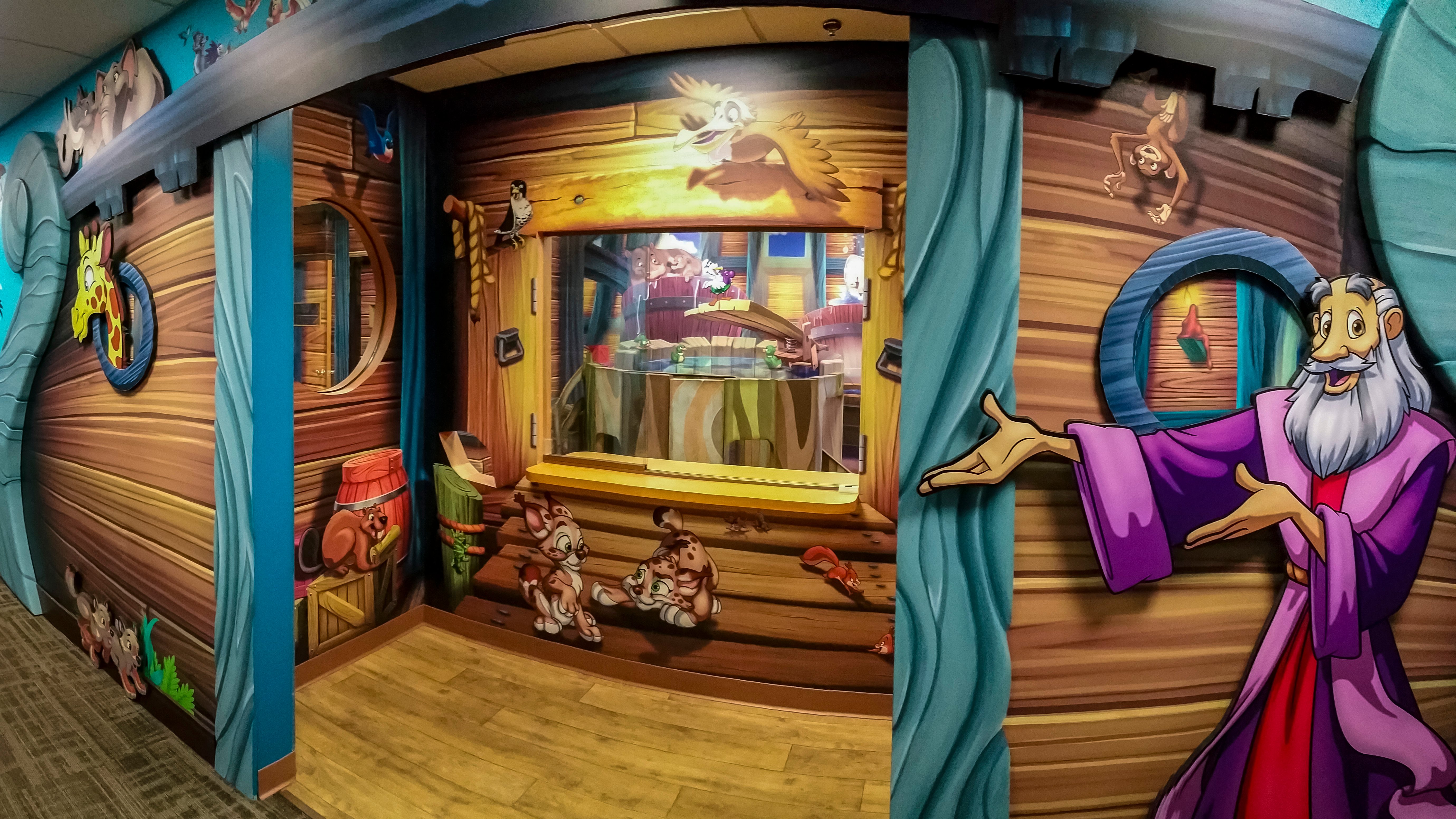
Children’s ministry spaces compete with powerful experiences kids encounter elsewhere — story-driven entertainment, interactive environments, and media designed to capture attention and imagination. In that context, space itself becomes part of how children interpret and remember what they’re learning.
A themed environment reinforces lessons through place and play, helping abstract ideas become tangible. When children can physically move through a story or concept, lessons are no longer just heard — they’re experienced. Educational research on multisensory learning consistently shows that engaging more than one sense supports stronger recall and deeper emotional connection, particularly for younger learners.
Immersive environments don’t replace teaching. They support it by giving children a physical context that aligns with the message being shared.
Pediatric Healthcare: Reducing Anxiety Through Engagement
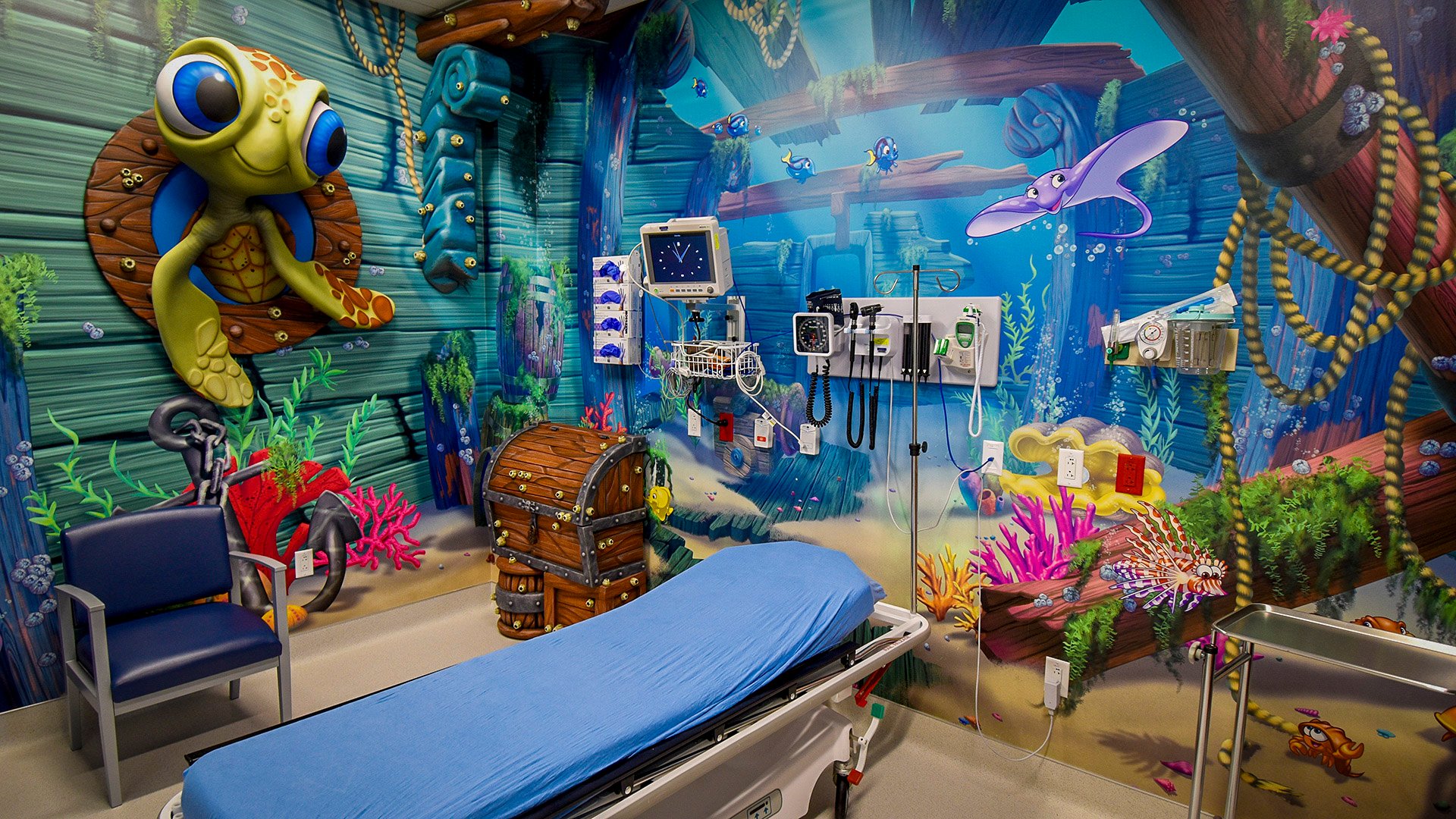
Healthcare environments are inherently stressful for children, regardless of how calm or modern the design may be. Research into pediatric environments shows that positive distraction — including engaging visuals and interactive elements — can reduce anxiety, improve mood, and increase cooperation during medical visits.
A literature review examining play and positive distraction in pediatric healthcare settings found consistent benefits related to emotional wellbeing and behavior when children had meaningful ways to engage with their surroundings. (Jiang, 2020)
A calm, modern waiting room may feel welcoming to parents, but a themed space gives children something different: a sense of focus, curiosity, and agency while they wait. The environment becomes a tool for coping, not just a backdrop.
Education: Learning in Context, Not in Isolation
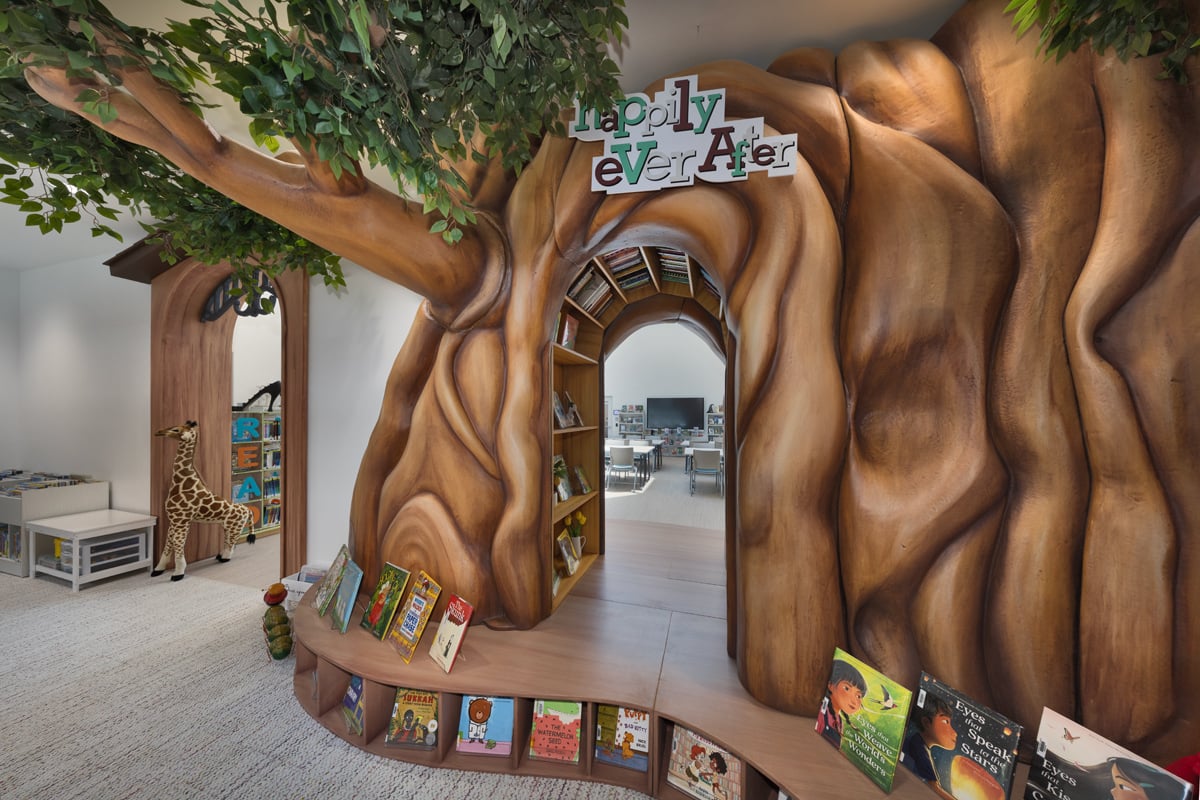
Across education formats — early childhood, elementary, and informal learning environments — research consistently shows that children learn more effectively when new information is connected to context and experience. Learning doesn’t happen in isolation; it happens as children relate ideas to the world around them.
Environments that reflect a clear concept or story help children organize information, make connections across subjects, and understand how ideas fit together. When space reinforces learning through visual and spatial cues, children are better able to engage, remember, and apply what they’ve learned.
Rather than acting as neutral containers for instruction, thoughtfully designed environments support learning by giving children a framework they can see, move through, and interact with.
Parks & Recreation: Spaces That Invite Return and Belonging
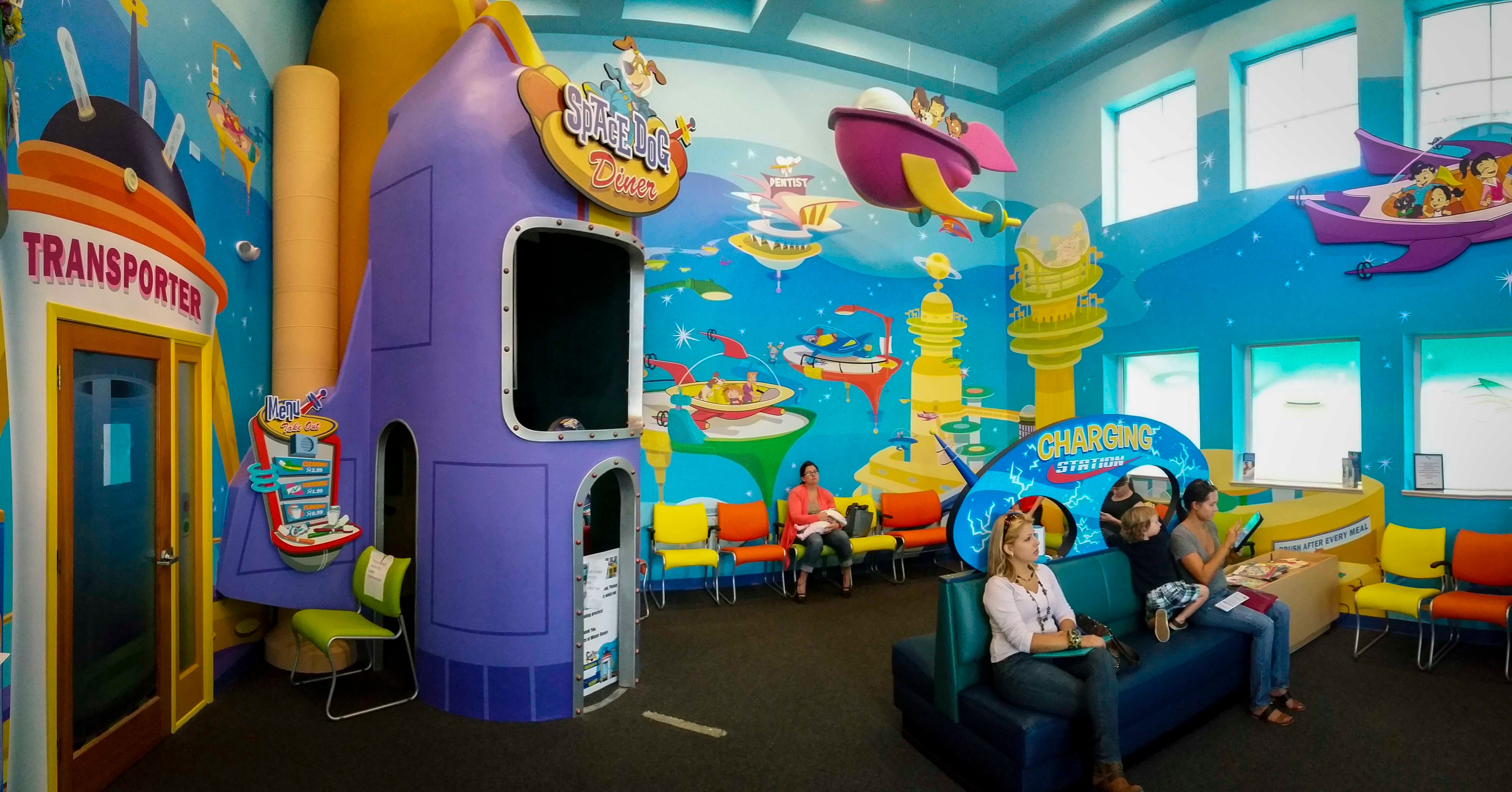
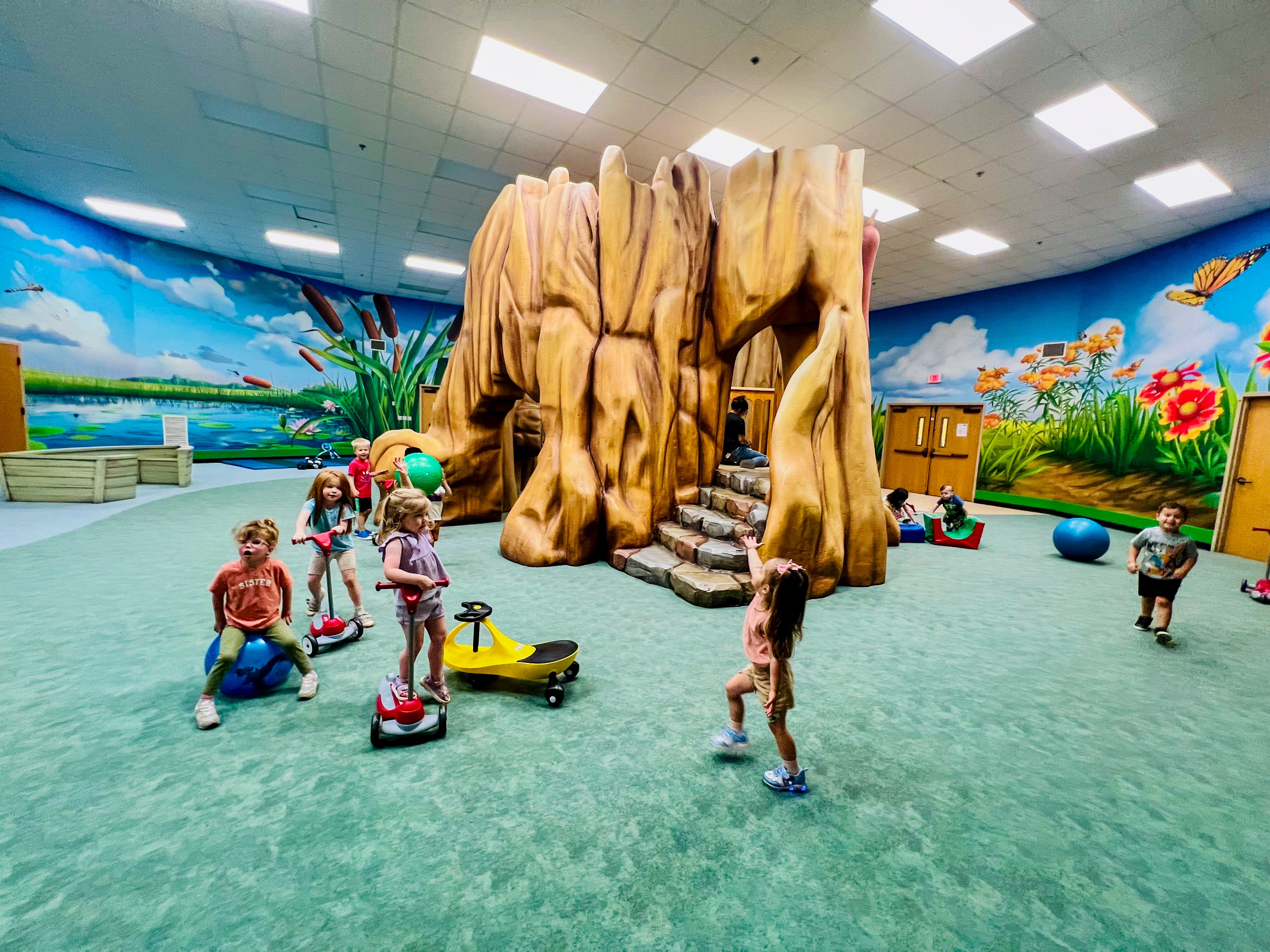
In parks and recreation settings, engagement is one of the clearest measures of success. Spaces that feel generic are often used briefly and forgotten. Spaces with a strong sense of identity invite exploration, longer stays, and repeat visits.
Themed environments help transform play areas from places families pass through into destinations they seek out. By giving children a recognizable world to step into — rather than isolated pieces of equipment — themed spaces encourage imaginative play, social interaction, and a stronger emotional connection to the space.
For communities, this translates into play environments that feel meaningful, memorable, and worth returning to — outcomes that go beyond basic functionality.

Timelessness vs. Trend: A Long-Term Perspective
Design Trends Change. Childhood Needs Don’t.
Minimalist interior design trends will continue to evolve. Colors, finishes, and styles always do.
But immersive theming isn’t rooted in trends. It’s rooted in how children learn, play, and emotionally connect to their surroundings — something that hasn’t changed in generations.
Spaces built around story, exploration, and imagination tend to age better because their purpose stays relevant, even as materials and details are refreshed.
Design as a Starting Point, Experience as the Outcome
Interior design is essential. It ensures spaces are safe, functional, and welcoming.
But immersive theming adds something interior design alone cannot:
a sense of place that children understand intuitively.
For organizations serving children — churches, healthcare providers, educators, and parks professionals — that distinction matters. Because the environments kids remember, talk about, and want to return to aren’t just well-designed.
They’re the ones where kids felt like they belonged inside the story.
Stay in the know with Wacky World Studios! We're here to help you with all stages of your theming journey. Make sure you sign up for our monthly newsletter and subscribe to this blog for even more handy theming resources and information. You can also find lots of great inspiration by following us on social media. Our Pinterest and Instagram pages are overflowing with photos and ideas.
And for you DIYers, be sure to check out our online shop at WackyWorldDIY.com.
This article was co-written with human creatives and AI tools, and the content was checked for clarity and accuracy. Photo/video credits: Wacky World Studios, Charles Coleman Photography, Bourbonnais Township Park District, Miami in Focus, and Special Care, Inc.