

In the first article of this series, we explored how themed entertainment designers focus on creating experiences, not just spaces.
But what makes those experiences feel believable?
According to Jamie DeRuyter, Entertainment Design Department Head at Ringling College of Art and Design, one of the biggest differences between themed entertainment design and traditional design disciplines is the intentional use of all the senses. Rather than relying on visual elements alone, immersive environments use sound, touch, smell, temperature, and other sensory cues to help guests feel like they're truly part of the experience.
The goal isn't simply to create an attractive environment.
The goal is to create a world that people believe in.
Course Syllabus
Immersion Is More Than What We See
Why Multiple Senses Create Believability
Every Sense Should Support the Story
A Real-World Example: Tree Top Escape
Forgetting You're in a Crafted Space
Applying Multi-Sensory Design Beyond Theme Parks
- Healthcare
- Children's Ministry
- Museums and Libraries
- Schools and Early Learning Centers
- Parks and Recreation Facilities
Key Takeaways
Watch the Interview
Frequently Asked Questions
- What is multi-sensory design?
- Why do immersive environments feel more believable?
- How does sensory design support storytelling?
- Which senses contribute to immersion?
- Can multi-sensory design be used outside of theme parks?
Immersion Is More Than What We See
When people think about immersive environments, they often picture visually impressive spaces.
Detailed architecture. Themed scenery. Murals, props, and special effects.
Those elements are important, but they're only part of the equation.
As DeRuyter explains, immersive designers think about every sense they can engage. Guests will naturally touch surfaces, listen to ambient sounds, feel changes in temperature, and notice countless environmental details whether they realize it or not.
"It's got to support the story and experience."
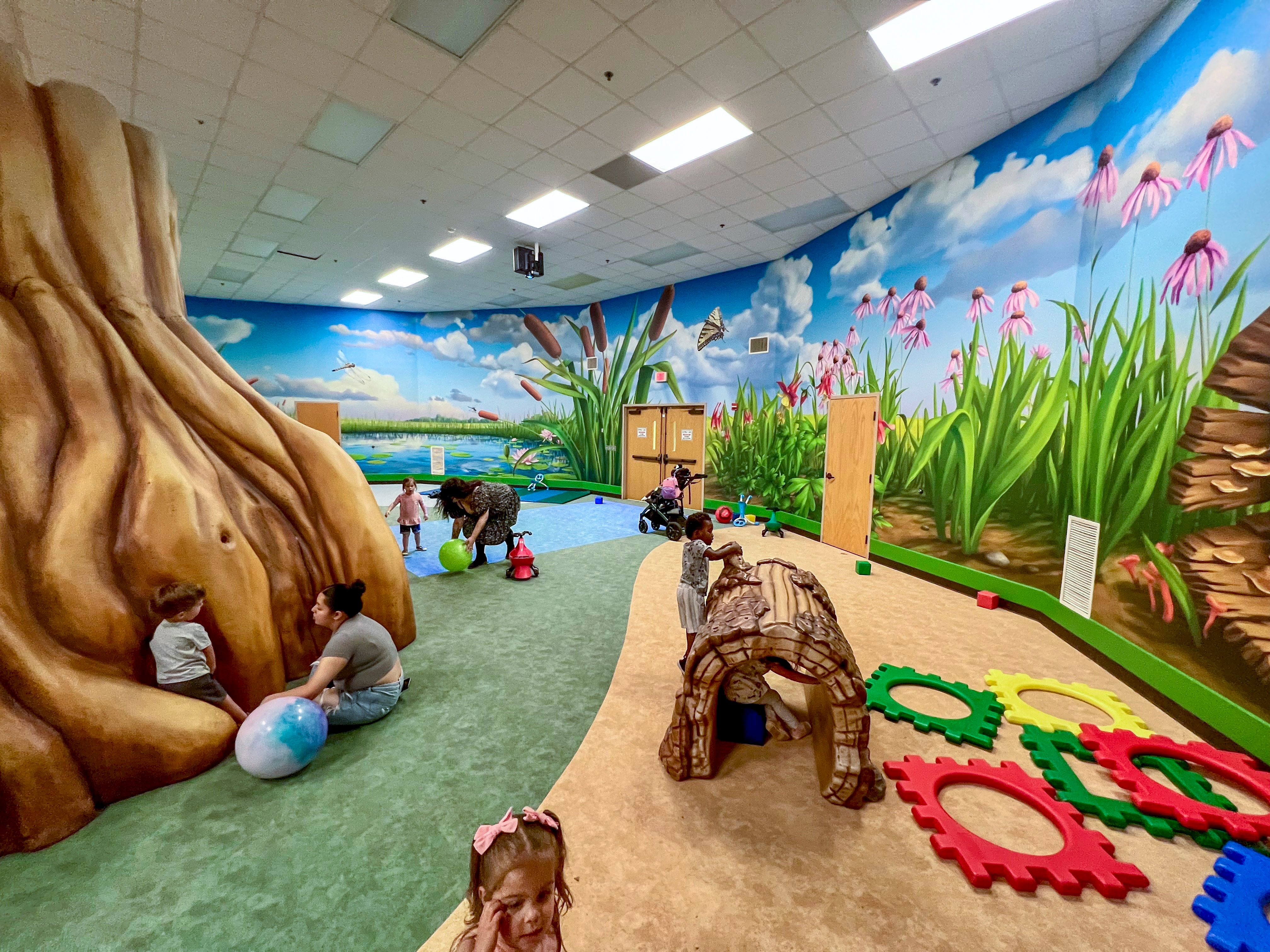
In other words, sensory design isn't about adding effects simply because they're available.
Every sensory element should help reinforce the larger experience.
Why Multiple Senses Create Believability
Think about the difference between looking at a photograph of a forest and actually standing in one.
The visuals matter.
But so do the sounds of birds overhead, the movement of air through the trees, the textures beneath your feet, and even the subtle scents carried on the breeze.
The experience feels convincing because multiple sensory cues are working together.
Immersive environments operate in much the same way.
Researchers have found that the brain continuously combines information from multiple senses to create a more complete understanding of the world around us. When sensory cues align, environments tend to feel more believable and easier to understand.
That's one reason immersive spaces often feel so engaging.
They're not relying on a single sensory input. They're creating a coordinated experience.
Every Sense Should Support the Story
One of the most important lessons from themed entertainment design is that sensory elements should never exist in isolation.
Their purpose is to support the story and experience.
DeRuyter uses the example of a themed queue line where guests may naturally touch a wooden post. In a traditional environment, the post simply needs to function properly. In an immersive environment, designers may also consider how its texture helps reinforce the world guests are entering.
As he explains:
"We're thinking about how that touch, that tactile sense enhances the story and further draws you into the world."
The same principle applies to every other sensory cue.
Sounds should reinforce the environment. Textures should feel appropriate to the setting. Environmental effects should support the experience being created.
The goal isn't to overwhelm guests with sensory stimulation.
It's to help them believe they're in that place.
A Real-World Example: Tree Top Escape
The Tree Top Escape indoor playground at the West Chicago Park District's ARC Center offers a great example of sensory design working in support of a larger experience.
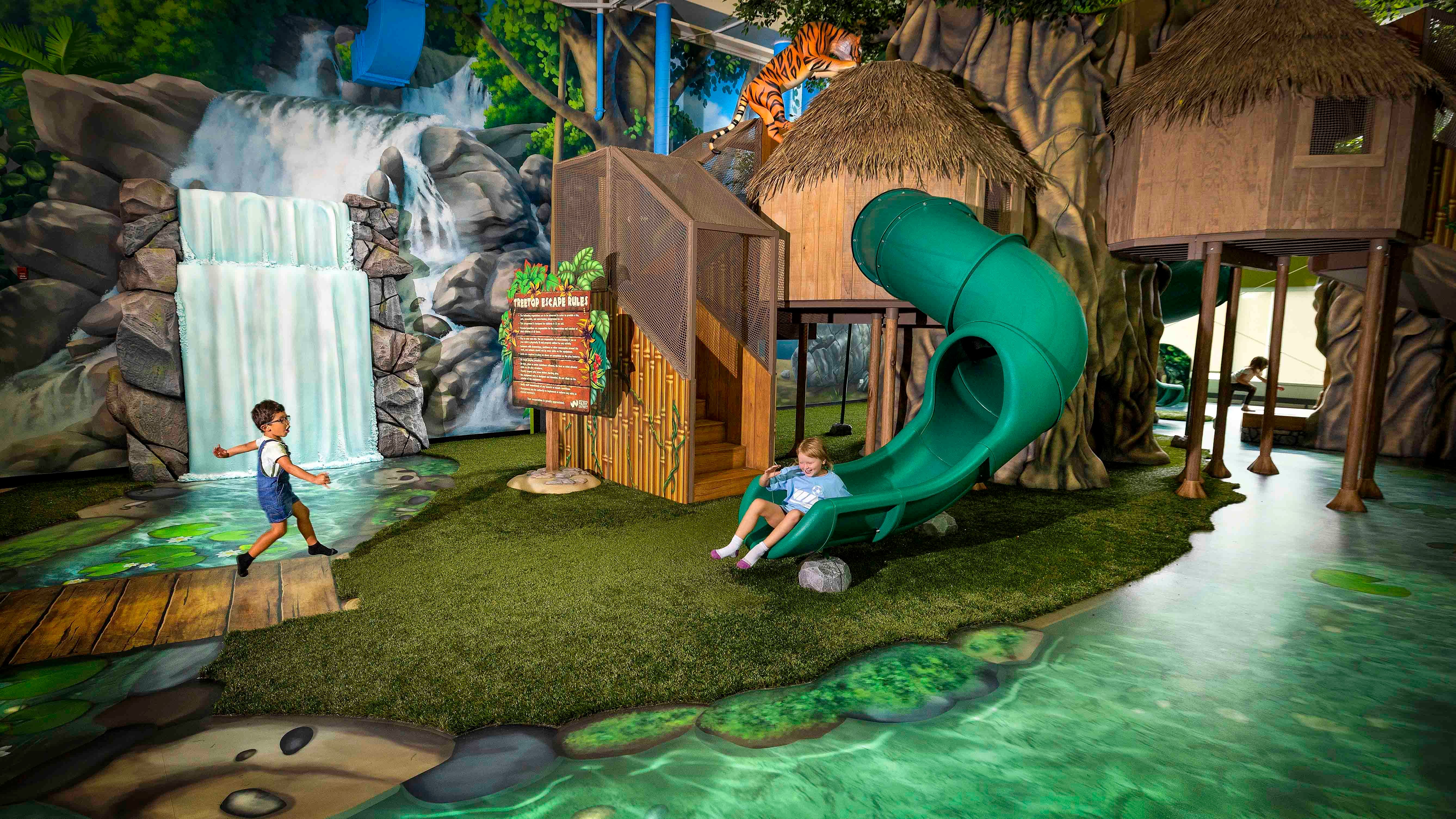
Visitors immediately notice the visual elements of the space. Oversized tree-inspired structures, natural textures, themed play features, and immersive scenery help create the feeling of an outdoor adventure.
But the experience extends beyond what guests can see.
To reinforce the environment, custom audio effects were developed for some of the interactive features including bird calls, rushing water, animal sounds, and other ambient audio. While visitors may not consciously focus on each individual sound, those sensory cues help strengthen the overall atmosphere.
The sounds support the visuals.
The visuals support the story.
The story supports the experience.
No single element creates immersion on its own. The experience emerges from multiple sensory cues working together.
Forgetting You're in a Crafted Space
Perhaps the most interesting observation from DeRuyter's interview is that immersive environments aren't necessarily trying to draw attention to themselves.
In many cases, they're trying to do the opposite.
The goal is to help guests stop thinking about the fact that they're standing inside a carefully designed environment and simply enjoy the experience.
As DeRuyter explains, addressing all the senses helps create the immersion and believability needed for guests to "forget about the fact that they're in a crafted space" and become absorbed in the world around them.
That's when immersive design is often at its most effective.
Not when visitors notice the design. But when they stop noticing it altogether.
Applying Multi-Sensory Design Beyond Theme Parks
While themed attractions may be the most visible examples of sensory design, these principles can be applied in many other environments.
Healthcare
Thoughtful use of sound, texture, lighting, and environmental graphics can help create more welcoming and engaging patient experiences.
Children's Ministry
Interactive environments can reinforce lessons while encouraging participation and exploration.
Museums and Libraries
Multi-sensory exhibits can help visitors engage more deeply with information and experiences.
Schools and Early Learning Centers
Hands-on environments can support active learning and curiosity.
Parks and Recreation Facilities
Sensory-rich spaces can transform ordinary facilities into memorable destinations that families want to revisit.
Key Takeaways
- Immersion involves more than visual design.
- Sensory elements should support the larger story and experience.
- Sight, sound, touch, smell, and environmental effects all contribute to believability.
- Multiple sensory cues working together create stronger immersion than any single element alone.
- Multi-sensory design principles can be applied far beyond themed attractions.
Watch the Interview
In this second installment of What Themed Entertainment Can Teach Us About Designing Memorable Spaces, Jamie DeRuyter discusses how immersive environments engage multiple senses to support the story, strengthen believability, and draw guests deeper into the experience.
Frequently Asked Questions
What is multi-sensory design?
Multi-sensory design is the practice of engaging multiple senses—such as sight, sound, touch, and smell—to create a richer and more immersive experience.
Why do immersive environments feel more believable?
Immersive environments combine multiple sensory cues that reinforce one another and support the larger story being told.
How does sensory design support storytelling?
Sensory elements help guests experience a setting rather than simply observe it, making stories feel more believable and engaging.
Which senses contribute to immersion?
Sight, sound, touch, smell, temperature, movement, and environmental effects can all contribute to an immersive experience.
Can multi-sensory design be used outside of theme parks?
Yes. Healthcare facilities, schools, museums, libraries, churches, and recreation spaces, and others can all use multi-sensory design principles to create more engaging environments.
Stay in the know with Wacky World Studios! We're here to help you with all stages of your theming journey. Make sure you sign up for our monthly newsletter and subscribe to this blog for even more handy theming resources and information. You can also find lots of great inspiration by following us on social media. Our Pinterest and Instagram pages are overflowing with photos and ideas.
And for you DIYers, be sure to check out our online shop at WackyWorldDIY.com.
This article was co-written with human creatives and AI tools, and the content was checked for clarity and accuracy. Photo/video credits: Wacky World Studios, Charles Coleman Photography, and Special Care, Inc.